Quick answer
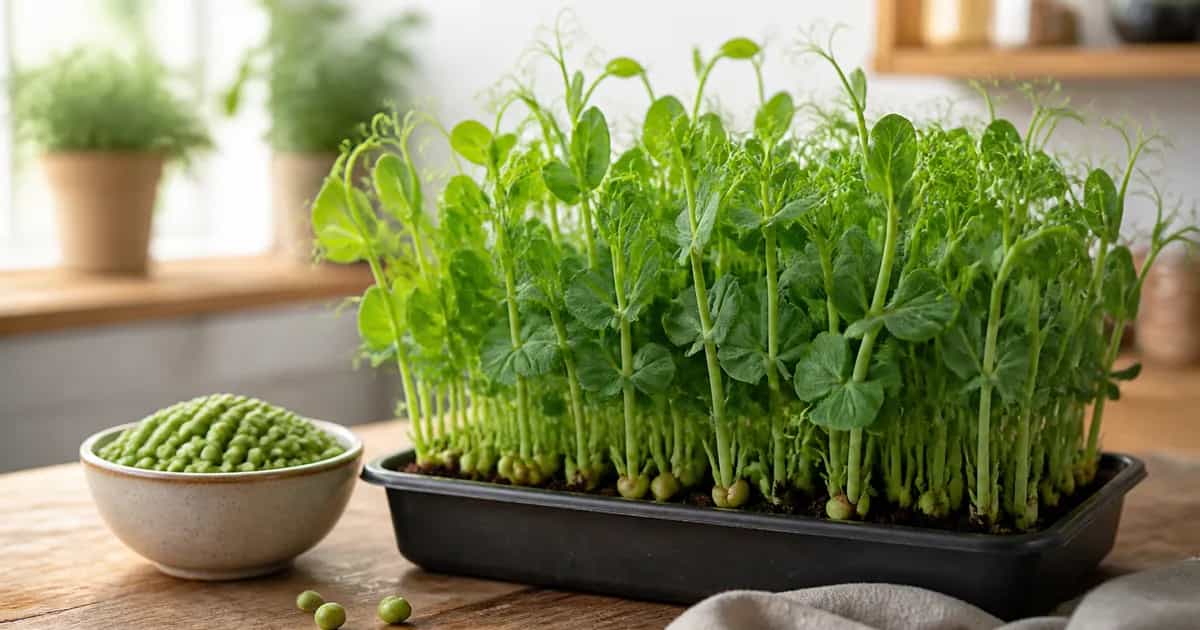
Pea microgreens, often called pea shoots, contain water, carbohydrate, plant protein, fiber, vitamins, minerals, and phytochemicals. Published studies can provide results per 100 g fresh weight, but those values describe the tested cultivar and system. Dry peas, pea sprouts, and pea shoots are not interchangeable nutrition entries.
How to interpret 100 g
Pea shoots are larger and heavier than many tiny brassica microgreens, so 100 g is easier to visualize—but it is still a comparison unit, not a universal recommended serving. The same crop can show different fresh-weight values if one sample contains more water.
Never compare a dry-weight result directly with a fresh-weight label. Use the nutrition facts per 100 g guide to identify the basis first.
Protein and macro claims
Pea shoots contain protein, but phrases such as “high protein” depend on a defined serving and labeling rules. The protein concentration of dry peas cannot be transferred to fresh shoots. Germination changes the plant, while fresh tissue greatly increases the water fraction.
A responsible comparison should list:
- crop and cultivar;
- fresh or dry basis;
- grams per stated amount;
- laboratory source;
- variation or uncertainty;
- realistic serving volume.
Read the microgreens protein guide, high-protein comparison, and macro guide before ranking crops.
Vitamins and minerals
Pea has been included in controlled multi-crop work measuring vitamin C and minerals. The studies demonstrate that pea shoots contribute micronutrients and that results differ among crops. They do not support copying one research sample onto every retail label.
The vitamin and mineral guide explains why a study panel can be informative even when it is not a complete nutrition label.
Serving and meal use
Pea shoots are sweet, green, crisp, and filling compared with delicate amaranth. Use them in sandwiches, stir-fries added at the end, salads, noodle bowls, wraps, and smoothies. Tougher tendrils can be chopped.
Explore microgreen meal ideas, smoothie recipes, and the recipe collection.
Growing notes
Peas often benefit from soaking, close seed contact, and weight during early germination. Good airflow and bottom watering help manage dense growth. Follow the pea shoot growing guide, pea variety profile, and seed-soaking guide.
Bottom line
Pea microgreens are a substantial fresh crop with useful composition research. Keep 100 g values attached to the tested cultivar, fresh-weight basis, and method; do not substitute dry pea nutrition.