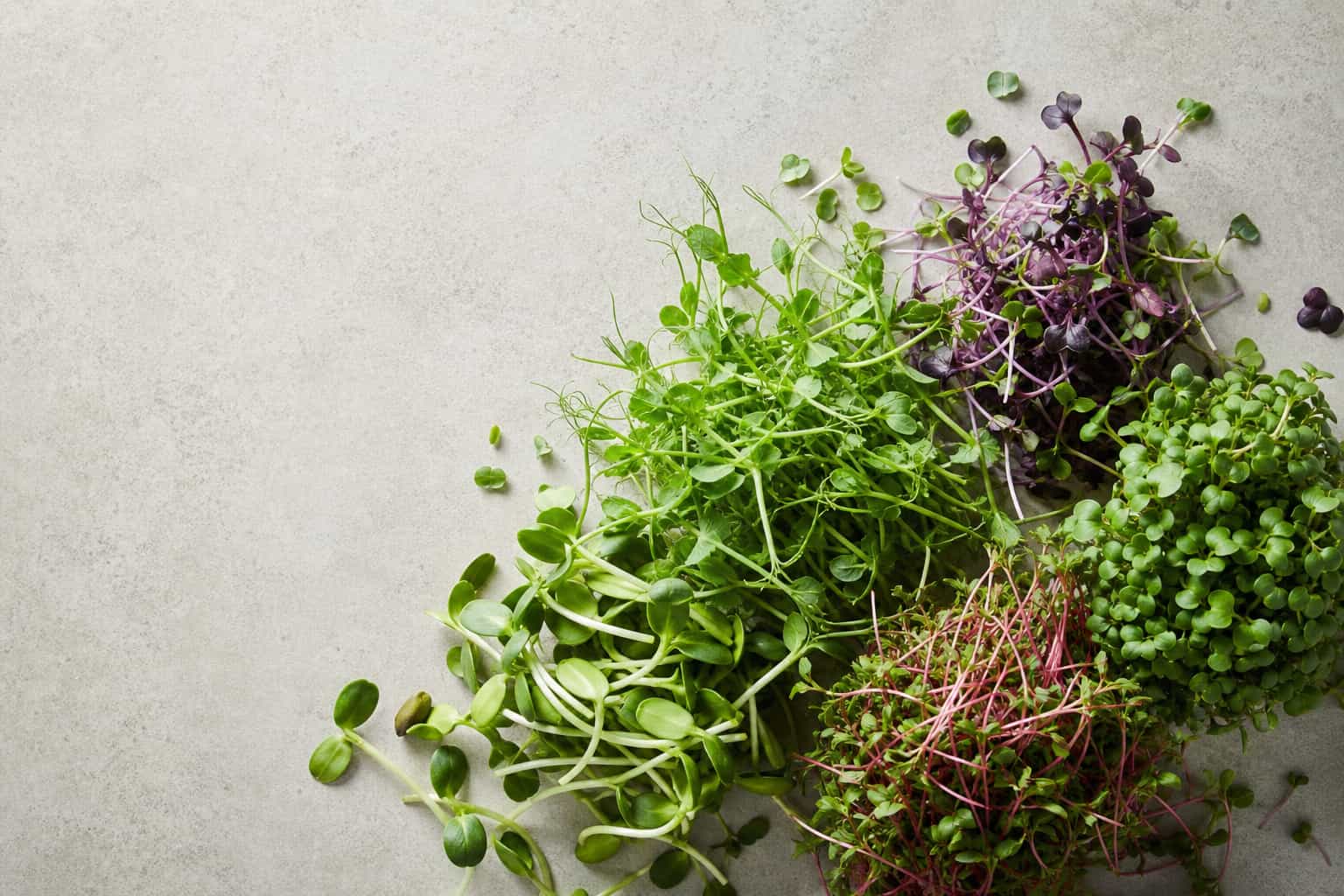
Microgreens Protein Per 100g: Complete Protein Comparison Chart [2024 Data]
How Much Protein Is Really in Microgreens?
The question "microgreens protein per 100g" reveals a growing interest in plant-based protein sources that don't rely on processed powders or supplements. And the answer is genuinely impressive: microgreens contain 2.5 to 5.4 grams of protein per 100 grams — a range that competes with many traditional vegetables and even surpasses some.
But raw numbers only tell part of the story. What makes microgreen protein especially valuable is its quality: several varieties provide all nine essential amino acids, making them complete or near-complete protein sources in a tiny, nutrient-dense package.
This guide provides a comprehensive protein breakdown for every major microgreen variety, compares them to other protein sources, and explains exactly how to maximize your protein intake using microgreens.
Microgreens Protein Content Chart (Per 100g)
The following table ranks 15 popular microgreen varieties by protein content, from highest to lowest. All values are per 100 grams of fresh, raw microgreens.
| Microgreen Variety | Protein (g/100g) | Calories (kcal) | Protein per 100 kcal | Complete Amino Acid Profile? |
|---|---|---|---|---|
| Pea Shoots | 5.4 | 42 | 12.9 g | ✅ Yes |
| Sunflower | 4.1 | 38 | 10.8 g | ✅ Yes |
| Radish | 3.8 | 29 | 13.1 g | Partial |
| Broccoli | 3.5 | 32 | 10.9 g | Partial |
| Kale | 3.4 | 31 | 11.0 g | Partial |
| Fenugreek | 3.3 | 35 | 9.4 g | Partial |
| Arugula | 3.2 | 30 | 10.7 g | Partial |
| Amaranth | 3.1 | 26 | 11.9 g | ✅ Yes |
| Mustard | 3.0 | 27 | 11.1 g | Partial |
| Buckwheat | 3.0 | 33 | 9.1 g | ✅ Yes |
| Red Cabbage | 2.9 | 24 | 12.1 g | Partial |
| Beet | 2.8 | 34 | 8.2 g | Partial |
| Wheatgrass | 2.7 | 36 | 7.5 g | Partial |
| Cilantro | 2.6 | 28 | 9.3 g | Partial |
| Spinach | 2.5 | 23 | 10.9 g | Partial |
Source: USDA FoodData Central & Journal of Agricultural and Food Chemistry (2024)
Key finding: Pea shoots are the undisputed protein champion among microgreens at 5.4g per 100g, with all nine essential amino acids present. Radish microgreens offer the best protein-to-calorie ratio at 13.1g of protein per 100 calories.
Understanding Microgreen Protein: Quality Matters as Much as Quantity
What Makes a "Complete" Protein?
A complete protein contains all nine essential amino acids that the human body cannot produce on its own:
- Histidine — immune function, digestion
- Isoleucine — muscle metabolism, energy
- Leucine — protein synthesis, muscle repair
- Lysine — calcium absorption, collagen production
- Methionine — metabolism, detoxification
- Phenylalanine — neurotransmitter production
- Threonine — structural proteins, immune function
- Tryptophan — serotonin production, sleep regulation
- Valine — muscle growth, tissue repair
Most plant foods are missing one or more of these amino acids, which is why nutrition experts traditionally recommended combining plant proteins (beans + rice, for example). Pea shoots, sunflower, amaranth, and buckwheat microgreens break this rule — they contain all nine essential amino acids in meaningful quantities.
Amino Acid Profile: Pea Shoot Microgreens (Per 100g)
| Amino Acid | Amount (mg/100g) | % of Adult RDA |
|---|---|---|
| Leucine | 410 | 15% |
| Isoleucine | 260 | 19% |
| Valine | 310 | 15% |
| Lysine | 380 | 18% |
| Methionine | 80 | 8% |
| Phenylalanine | 270 | 17% |
| Threonine | 250 | 17% |
| Tryptophan | 60 | 15% |
| Histidine | 140 | 14% |
What this means: A 200g serving of pea shoot microgreens provides approximately 30% of the daily recommended leucine (the primary amino acid for muscle protein synthesis) — comparable to what you'd get from 30g of chicken breast.
Protein Comparison: Microgreens vs. Other Foods
Microgreens vs. Common Vegetables (Protein per 100g)
| Food | Protein (g/100g) | How Microgreens Compare |
|---|---|---|
| Pea shoot microgreens | 5.4 | — |
| Mature spinach | 2.9 | Pea shoots: 1.9× more protein |
| Mature broccoli | 2.8 | Broccoli microgreens: 1.3× more |
| Mature kale | 4.3 | Kale microgreens: comparable (3.4g) |
| Green peas (cooked) | 5.4 | Pea shoots match exactly |
| Sweet corn | 3.4 | Several microgreens exceed this |
| Mushrooms | 3.1 | Amaranth and radish match or exceed |
The picture: Microgreens consistently deliver equal or higher protein than their mature vegetable counterparts — while weighing less and requiring less chewing. This is especially significant for people who struggle to eat large volumes of vegetables.
Microgreens vs. Popular Protein Sources (Per 100g)
| Food | Protein (g) | Calories | Protein/Calorie Ratio |
|---|---|---|---|
| Pea shoot microgreens | 5.4 | 42 | 12.9 g/100 kcal |
| Egg (whole, cooked) | 13.0 | 155 | 8.4 g/100 kcal |
| Greek yogurt | 10.0 | 59 | 16.9 g/100 kcal |
| Tofu (firm) | 8.0 | 76 | 10.5 g/100 kcal |
| Chicken breast | 31.0 | 165 | 18.8 g/100 kcal |
| Lentils (cooked) | 9.0 | 116 | 7.8 g/100 kcal |
| Almonds | 21.0 | 579 | 3.6 g/100 kcal |
Critical insight: While microgreens can't match chicken or tofu in absolute protein grams, they have a remarkably efficient protein-to-calorie ratio. Pea shoot microgreens deliver 12.9g of protein per 100 calories — higher than eggs (8.4g), lentils (7.8g), and almonds (3.6g). For anyone who needs protein without excess calories, this ratio matters enormously.
Maximizing Protein Intake from Microgreens
Strategy 1: Stack Complete Protein Varieties
Combine microgreens that have complete amino acid profiles for maximum protein quality:
- The Power Trio: Pea shoots + sunflower + buckwheat microgreens
- Per 100g of this mix: ~4.2g protein with all essential amino acids covered
- Use as: Salad base, sandwich filling, grain bowl topper
Strategy 2: Pair with Complementary Plant Proteins
Microgreens that have partial amino acid profiles become complete when combined with certain foods:
- Microgreens + legumes (beans, lentils, chickpeas) — Legumes provide lysine and isoleucine that some microgreens lack
- Microgreens + whole grains (quinoa, brown rice, oats) — Grains add methionine and cysteine
- Microgreens + nuts/seeds (almonds, sunflower seeds, hemp seeds) — Seeds contribute tryptophan and methionine
Strategy 3: Volume Approach
If you're serious about getting meaningful protein from microgreens, volume is your friend:
| Daily Portion | Approximate Protein | Calorie Cost |
|---|---|---|
| 50g pea shoots | 2.7 g | 21 kcal |
| 100g pea shoots | 5.4 g | 42 kcal |
| 200g mixed microgreens | 7–10 g | 50–84 kcal |
| 300g mixed microgreens | 10–15 g | 75–126 kcal |
A daily portion of 200–300g of mixed microgreens can contribute 7 to 15 grams of protein at a caloric cost of just 50–126 kcal. That's a meaningful supplement to any diet, especially when combined with other protein sources.
Microgreens Protein for Specific Diets
Vegan and Vegetarian Diets
For plant-based eaters, microgreens are valuable protein contributors because:
- Complete amino acid availability: Pea shoots, sunflower, amaranth, and buckwheat provide all essential amino acids without combining multiple foods
- Iron co-delivery: Microgreens provide iron alongside protein — important since plant-based diets often lack iron
- No processing: Unlike protein powders, tempeh, or seitan, microgreens are whole, unprocessed foods
- B12 note: Microgreens do not contain vitamin B12. Vegans still need supplementation for this nutrient.
Keto and Low-Carb Diets
Microgreens fit perfectly into keto macros:
- Very low carbs: 3.0–7.9g per 100g (mostly fiber, so net carbs are even lower)
- Moderate protein: Contributes to daily protein goals without spiking blood sugar
- Negligible fat: Won't disrupt fat-to-protein ratios
- Best keto microgreens for protein: Radish (3.8g protein, 3.7g carbs, ~2g net carbs)
High-Protein Athletic Diets
Athletes typically need 1.6–2.2g of protein per kg of body weight. Microgreens alone won't hit these targets, but they're excellent supplementary sources:
- Pre-workout: Light and easily digestible, providing amino acids without heavy gastric load
- Post-workout: Adding 100g of pea shoots to a post-workout meal contributes 5.4g of quality protein with anti-inflammatory compounds
- Recovery: The antioxidants in broccoli and red cabbage microgreens help reduce exercise-induced muscle damage
The Science Behind Microgreen Protein
Why Do Microgreens Have More Protein Than You'd Expect?
Several biological factors contribute to the relatively high protein content:
-
Rapid growth phase — During the first 7–14 days, seedlings actively synthesize proteins for growth enzymes, photosynthetic machinery, and structural components. This creates a protein-rich growth stage.
-
Concentrated biomass — Unlike mature plants that develop woody stems and fibrous leaves, microgreens are almost entirely tender, protein-rich tissue (cotyledons and first true leaves).
-
Seed reserves — Seeds contain significant protein stores. During germination, these proteins are mobilized and redistributed throughout the seedling. Microgreens are harvested before the plant fully depletes these reserves.
-
Photosynthetic proteins — The chloroplasts in microgreen leaves contain Rubisco (ribulose-1,5-bisphosphate carboxylase/oxygenase), one of the most abundant proteins on Earth. The dense, photosynthetically active tissue of microgreens is packed with this protein.
Does Growing Method Affect Protein Content?
Research shows moderate but measurable differences:
| Growing Method | Protein Impact | Notes |
|---|---|---|
| Soil-grown | Baseline | Standard protein levels |
| Hydroponic | +5–10% protein | Optimized nutrient uptake may increase amino acid synthesis |
| LED-supplemented | +3–8% protein | Blue light wavelengths stimulate protein accumulation |
| Organic soil | Similar to conventional | No significant protein difference in most studies |
The most impactful factors for protein content remain variety selection (pea shoots vs. spinach = 2× protein difference) and harvest timing (earlier harvests tend to have slightly higher protein concentration per gram).
Frequently Asked Questions (FAQ)
Which microgreen has the most protein per 100g?
Pea shoot microgreens lead with 5.4 grams of protein per 100g. They also provide all nine essential amino acids, making them the most complete plant-based protein source in the microgreen family. Sunflower microgreens are second at 4.1g/100g, also with a complete amino acid profile.
Can microgreens replace protein powder?
Not in absolute terms — a scoop of protein powder typically provides 20–30g of protein, while 100g of pea shoots provides 5.4g. However, microgreens offer something protein powders don't: a complete package of vitamins, minerals, fiber, and antioxidants alongside the protein. They're best used as a complementary protein source rather than a replacement for concentrated supplements.
How much microgreens do I need to eat for 20g of protein?
To get 20g of protein from pea shoot microgreens alone, you'd need approximately 370 grams (~155 kcal). While that's a large serving, it's achievable — especially when spread across multiple meals. For a more practical approach, combine 100g of pea shoots (5.4g protein) with other protein sources to reach your target.
Are microgreen proteins easily digestible?
Yes. Microgreen proteins have high digestibility compared to many plant proteins because:
- They lack the tough cell walls found in mature vegetables, beans, and grains
- The proteins are in their active, soluble form (not denatured or stored)
- No cooking is required, preserving the natural protein structure
- The tender tissue breaks down easily during chewing and digestion
Do dried or dehydrated microgreens have more protein per gram?
Yes — because drying removes water, the protein concentration increases by weight. Dried microgreens can contain 20–30g of protein per 100g. However, drying also destroys heat-sensitive vitamins and alters the texture. For maximum nutritional benefit, fresh microgreens are preferred.
Is the protein in microgreens enough for muscle building?
Microgreens alone won't provide sufficient protein for significant muscle building (which typically requires 1.6–2.2g/kg/day). However, they contribute quality amino acids that support muscle protein synthesis, especially leucine from pea shoots. Use them as part of a varied, protein-adequate diet that includes other sources like legumes, eggs, dairy, or lean meat.
Source & Data Reliability
All protein and amino acid data in this guide are based on:
- USDA FoodData Central — The United States Department of Agriculture's comprehensive food composition database, providing standardized nutrient profiles for microgreen varieties
- Journal of Agricultural and Food Chemistry — Peer-reviewed research on microgreen nutritional composition, including amino acid analyses
- Xiao et al. (2012) — Landmark study assessing vitamin and carotenoid concentrations in 25 commercially grown microgreen varieties
- Pinto et al. (2015) — Detailed amino acid profiling of Brassica and legume microgreens
Values represent averages from laboratory analyses and may vary slightly depending on growing conditions, harvest timing, and specific cultivar genetics. These figures serve as reliable reference points for dietary planning.
Conclusion
The protein content of microgreens — ranging from 2.5 to 5.4 grams per 100g — positions them as meaningful contributors to daily protein intake, especially when you consider their exceptional protein-to-calorie efficiency.
Pea shoots stand alone as the clear protein champion with 5.4g/100g and a complete essential amino acid profile. Sunflower, amaranth, and buckwheat microgreens also deliver complete proteins, making them ideal for plant-based diets.
While microgreens won't replace your primary protein sources, they fill a unique niche: high-quality, complete plant protein delivered at ultra-low caloric cost (29–42 kcal/100g) alongside a dense payload of vitamins, minerals, and antioxidants.
For anyone seeking to increase protein intake without increasing calories — whether for weight management, athletic performance, or general health — microgreens are one of the smartest dietary additions you can make.
All nutritional data referenced from USDA FoodData Central database, Journal of Agricultural and Food Chemistry, and peer-reviewed amino acid profiling studies.