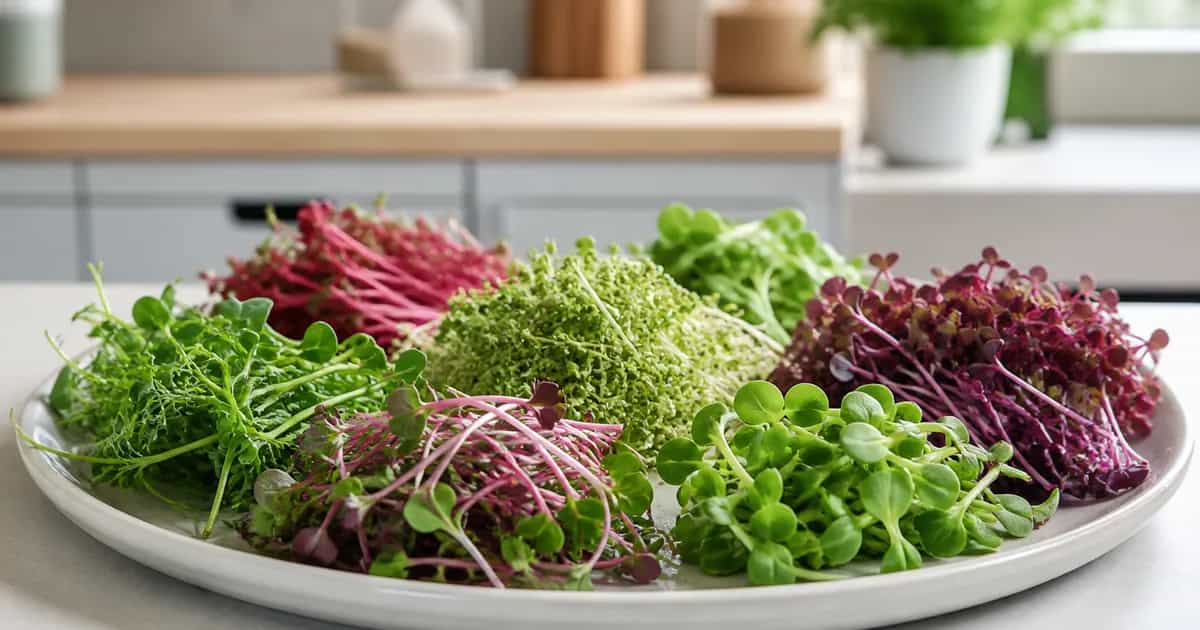
Microgreens Nutrition Facts: Complete Data Per 100g
Exact nutrient values per 100g for the most popular microgreen varieties — protein, vitamins, minerals, and antioxidants backed by USDA and peer-reviewed data.
Guides, research, and practical wisdom for growing nutrient-packed greens at home
articles in the knowledge base
34
Essential Reading
6
avg read
4min read
Exact nutrient values per 100g for the most popular microgreen varieties — protein, vitamins, minerals, and antioxidants backed by USDA and peer-reviewed data.
Germination is the most critical phase of microgreen growing. Understand exactly what's happening inside the seed and how to create the ideal conditions for fast, uniform sprouting.
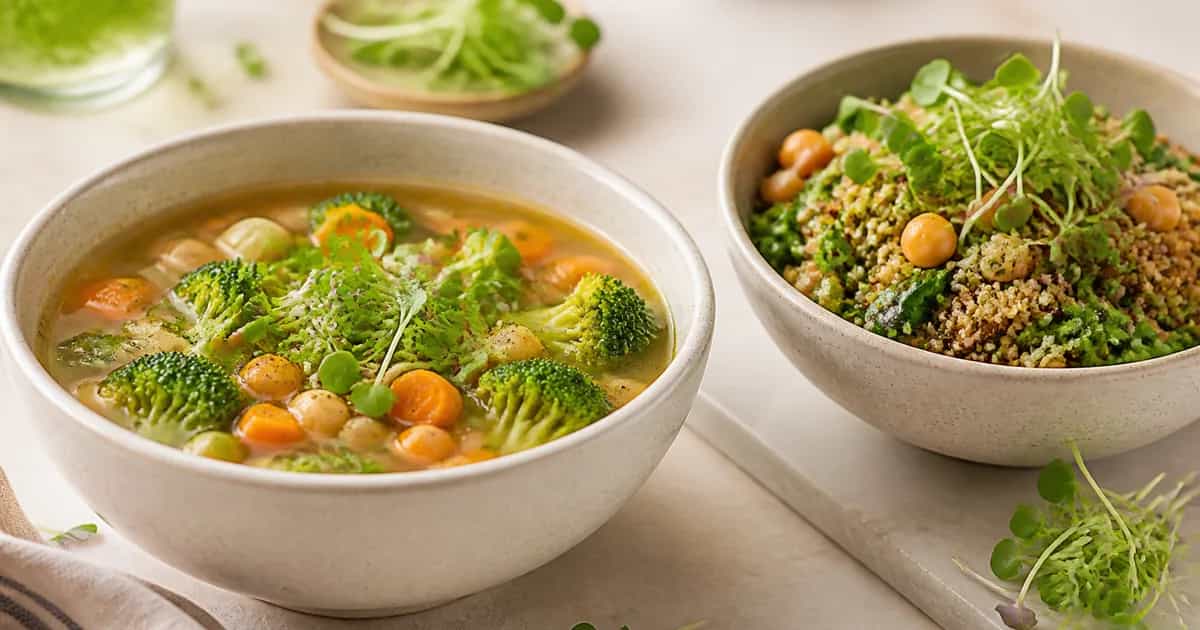
Microgreens can add flavor, color, and micronutrients to meals. Learn what the research supports, what it does not prove, and how to use them safely.
There is no universal microgreens serving size. Start with a small portion, build variety, and account for the rest of your meal and personal needs.
A practical broccoli microgreens growing method: sowing density, blackout, light, bottom watering, airflow, and harvest timing for a reliable home tray.
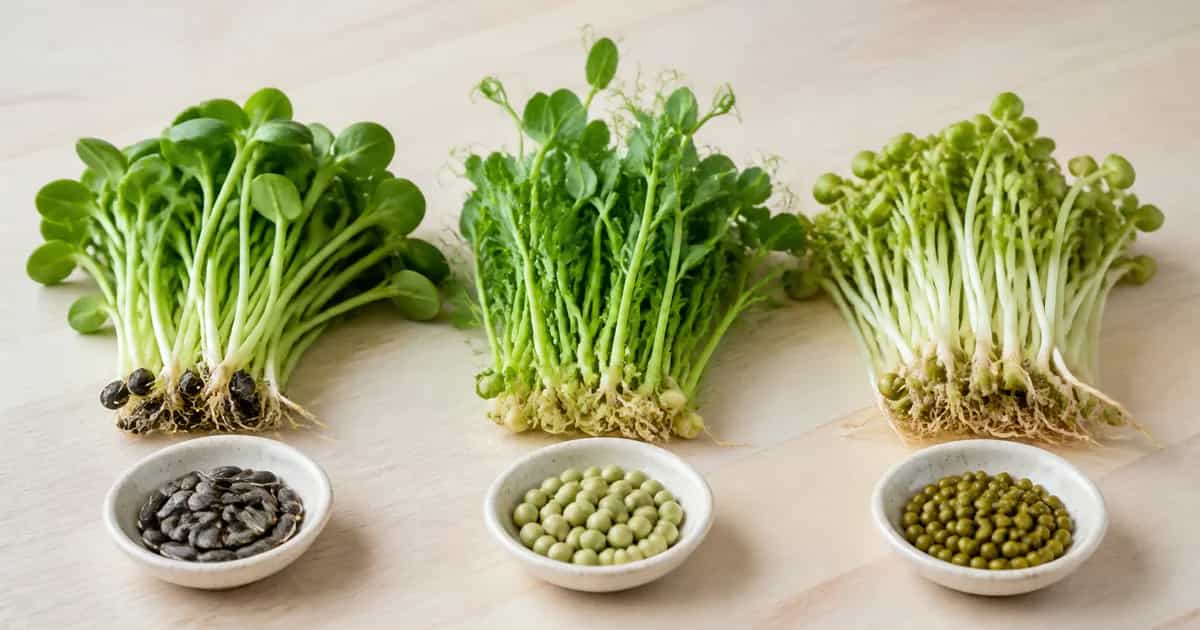
Learn how to soak, sow, support, water, and harvest pea shoots at home, with realistic timing, troubleshooting, and simple checks for a clean harvest.
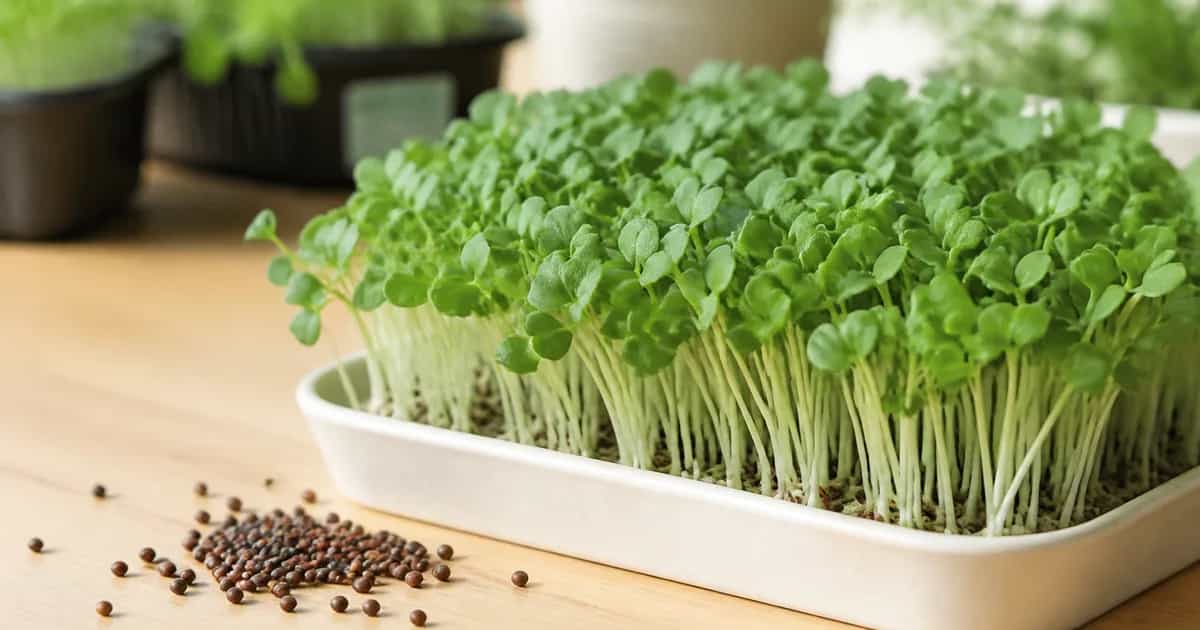
Grow crisp, spicy radish microgreens in about a week with a shallow tray, clean medium, even seeding, airflow, and a simple harvest check at home.
Grow crunchy sunflower microgreens with a long soak, firm seed contact, a short blackout, strong light, and a clean harvest routine for a consistent tray.
How much fiber is in microgreens? Compare fiber-rich pea shoots, kale, sunflower, and other varieties per 100g, with a clear data method and serving context.
Compare vitamin C, vitamin K, carotenoids, calcium, iron, and other microgreen nutrients, with a practical method for reading studies without overclaiming.
Compare microgreens and mature vegetables by harvest age, flavor, water content, and nutrient evidence—without treating headline ratios as guarantees.
Discover exactly how many calories are in every type of microgreen — plus why they deliver up to 40× more nutrients than regular vegetables at the same caloric cost.
How many calories are in microgreens? From red cabbage at just 24 kcal/100g to pea shoots at 42 kcal — see the full calorie breakdown for 15+ varieties, backed by USDA data.
Pea shoots deliver 5.4g protein per 100g with all essential amino acids. See how every microgreen variety ranks for protein content — backed by USDA laboratory data.
Seeds that won't sprout are frustrating — but every germination failure has a specific cause. Learn to diagnose and fix the most common germination problems.
Move beyond basic germination and master the variables that separate a 70% germination rate from a 95% one. Practical, evidence-based techniques for growers ready to level up.
Pale, stretched stems with weak, flopped-over tops are a common sight for new growers. The cause is almost always light — but the fix depends on which stage the problem appears.
Your gut microbiome shapes your immune system, mood, and metabolic health. Microgreens offer a surprisingly potent toolkit for feeding the bacteria that keep it thriving.
Freshly cut microgreens can last up to two weeks if stored correctly — or turn slimy in two days if not. Here's exactly what to do after the harvest.
Microgreens are one of the best gardening projects for children. Fast results, no outdoor space needed, and a natural bridge to healthy eating. Here's how to do it right.
The growing medium you choose shapes everything — germination speed, root health, flavor, and yield. Here's what the evidence shows about each option.
Most problems attributed to watering or lighting are actually caused by temperature and humidity. Learn the ranges that matter and how to control them at home.
Cold rooms, short days, and dry heating air create real challenges for winter growers. Here's how to maintain consistent yields when the temperature drops.
The tray you grow in affects drainage, airflow, and yield more than most beginners expect. Here's how to pick the right container for every situation.
Microgreens belong in more than just restaurant garnishes. Practical ideas for incorporating them into breakfast, lunch, dinner, and snacks.
How you water matters as much as how often. Bottom watering prevents mold, strengthens roots, and produces healthier microgreens.
Not all microgreens are created equal when you're starting out. These five varieties are forgiving, fast-growing, and deliver satisfying results on your first try.
From windowsills to LED grow lights — understand what your microgreens need to develop color, flavor, and nutrition.
Soaking seeds before planting dramatically improves germination rates. Learn the optimal soaking times for each variety and common mistakes to avoid.
Timing your harvest correctly is the difference between good and exceptional microgreens. Learn to read the signs and cut at the perfect moment.
34 articles in the knowledge base