Beyond the Garnish
The restaurant world uses microgreens as pretty decoration on top of finished dishes. That's fine, but it barely scratches the surface of what these greens can do in your kitchen.
Microgreens are ingredients, not decoration. Their concentrated flavors, varied textures, and nutritional density make them useful components of real meals.
Breakfast Ideas
Eggs and Microgreens
This is the easiest daily habit to build. Add a generous handful of microgreens to:
- Scrambled eggs — fold in pea shoots or kale microgreens in the last 30 seconds of cooking
- Omelets — use microgreens as a filling alongside cheese
- Fried eggs — pile radish microgreens on top after plating (the heat wilts them slightly and mellows the spice)
Toast and Spreads
Any open-faced toast benefits from microgreens:
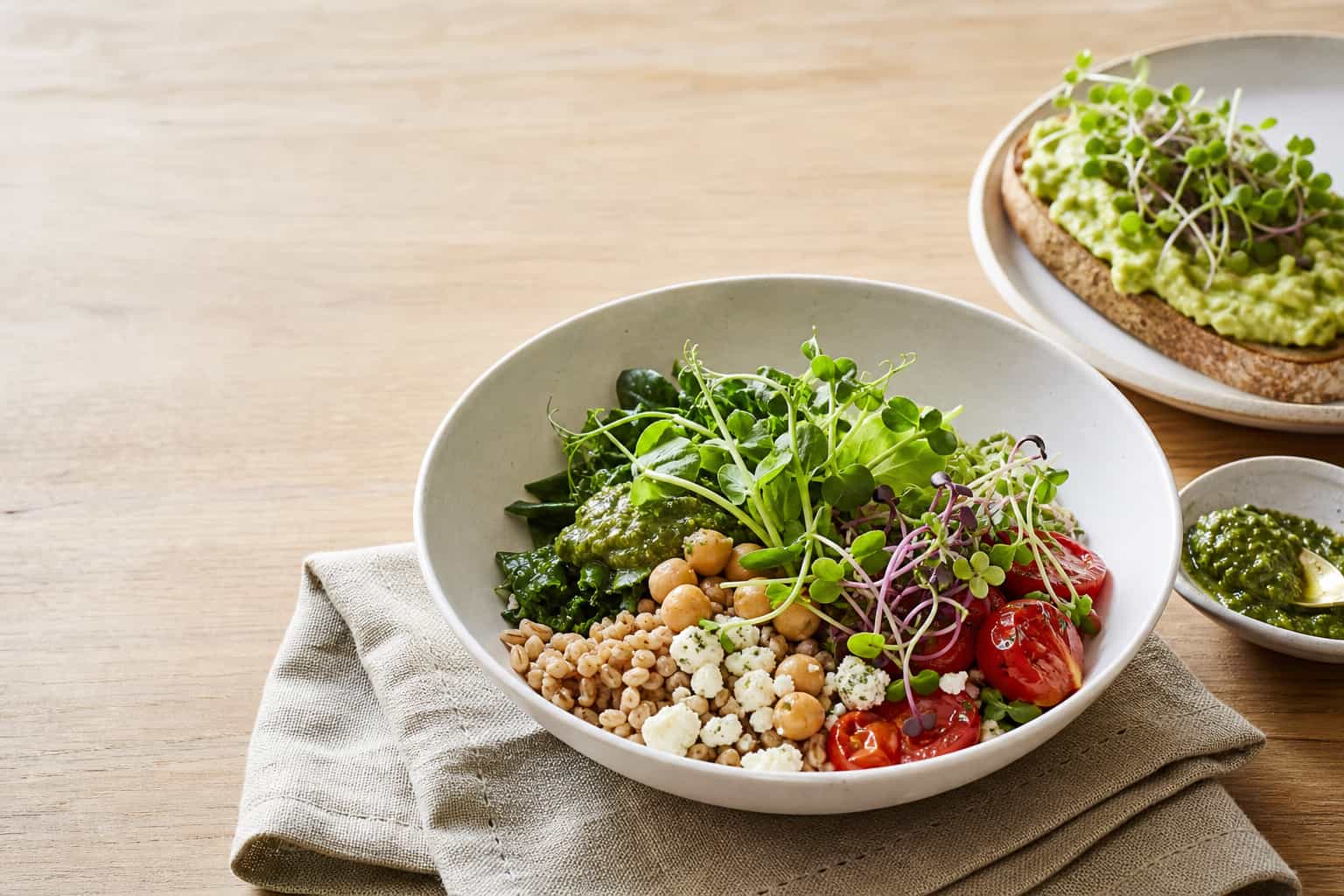
- Avocado toast with radish microgreens — the peppery heat cuts through the richness
- Cream cheese and sunflower microgreens on sourdough — nutty crunch against soft cheese
- Hummus toast with arugula microgreens — the bitterness balances the tahini
Smoothies
Mild varieties like pea shoots and broccoli microgreens blend well. Add a handful to any fruit smoothie for a nutrient boost without changing the flavor profile significantly. Avoid strong-flavored varieties like radish or arugula in smoothies — they'll dominate.
Lunch and Dinner
Salad Foundations
Use microgreens as the base instead of (or mixed with) lettuce:
- Pea shoots + sunflower as a base — sweet and crunchy
- Mixed microgreens with a simple lemon-olive oil dressing
- Arugula microgreens with shaved parmesan, lemon, and good olive oil (classic rocket salad, miniaturized)
Sandwich and Wrap Layers
Replace lettuce with microgreens in any sandwich. The flavor is more interesting and the portion fits better in layered foods. Radish microgreens in a turkey sandwich. Sunflower shoots in a veggie wrap. Pea shoots in a banh mi.
Soup and Bowl Toppers
Add microgreens after cooking, just before serving:
- Ramen or pho — drop a tangle of pea shoots on top
- Tomato soup — a nest of basil microgreens in the center
- Grain bowls — scatter mixed microgreens over warm rice, quinoa, or couscous
The heat of the dish slightly wilts the greens without destroying the nutrients (since you're not actually cooking them).
The Pairing Principle
Match the microgreen intensity to the dish:
| Microgreen | Intensity | Best With |
|---|---|---|
| Pea Shoots | Mild, sweet | Everything — the universal green |
| Sunflower | Mild, nutty | Sandwiches, salads, grain bowls |
| Broccoli | Mild, vegetal | Smoothies, soups, stir-fry finish |
| Kale | Mild, earthy | Eggs, risotto, pasta |
| Radish | Spicy | Tacos, eggs, fatty dishes |
| Arugula | Peppery, bitter | Cheese, olive oil, pizza |
Quantity Guidelines
For daily eating, aim for 1–2 cups of microgreens. This is roughly what one standard tray (10x20 inches) produces over a week of gradual harvesting.
The easiest approach: keep scissors and a tray near your kitchen prep area. Cut what you need, when you need it. Fresh-cut microgreens are always better than stored ones.