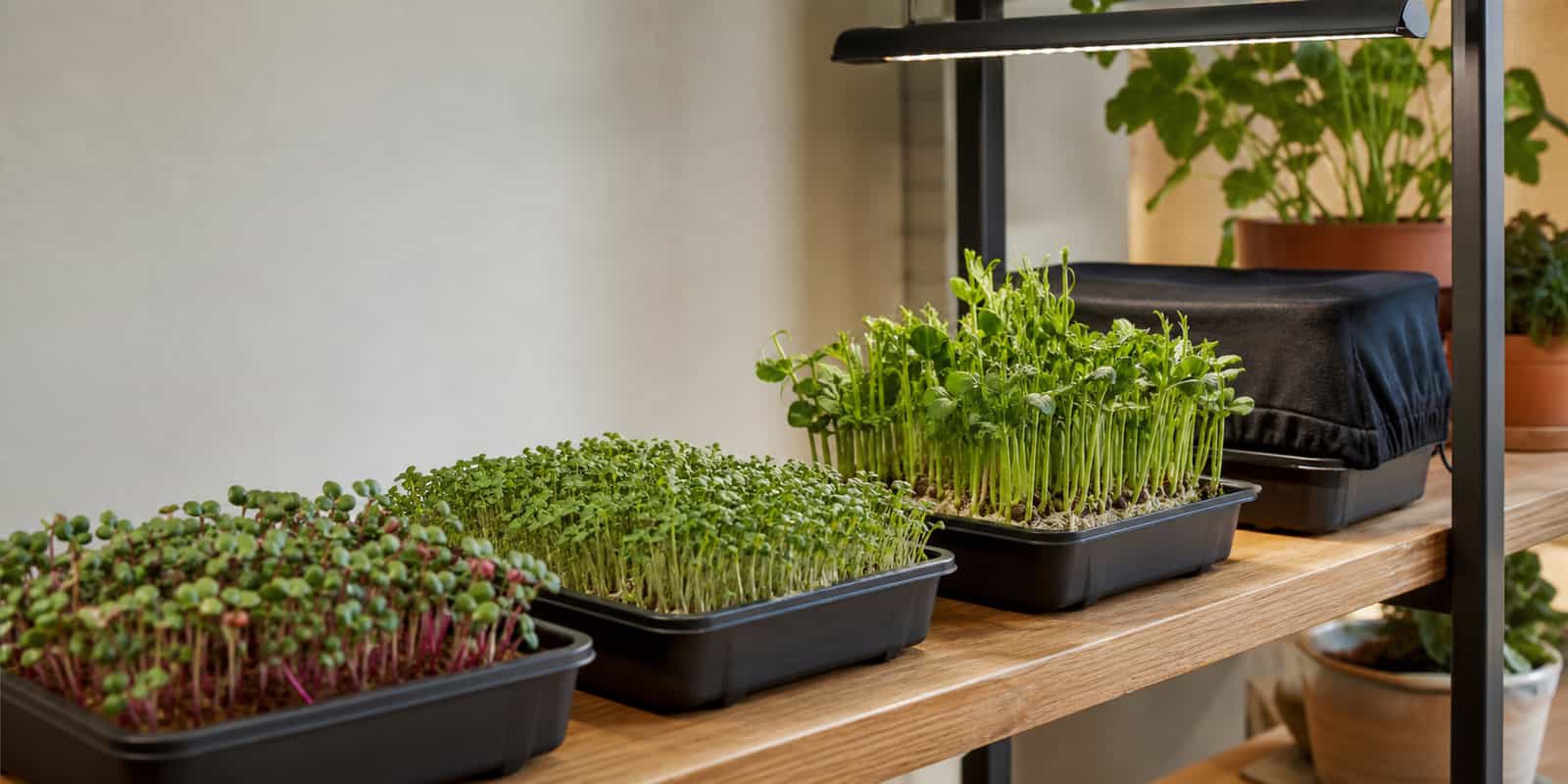
Why Light Matters
Light does more than make microgreens grow. It drives photosynthesis, which produces the sugars, pigments, and phytochemicals that determine flavor, color, and nutritional density. Inadequate light produces pale, leggy, flavorless greens. Good light produces vibrant, compact plants with deep color and concentrated nutrients.
The Blackout Phase
For the first 2–4 days after planting, microgreens should be in complete darkness. This mimics being buried in soil and forces the seedlings to stretch upward, developing longer, more harvestable stems.
During blackout:
- Cover trays with an opaque dome or inverted tray
- Leave a small gap for air circulation
- Check daily for germination progress
- Mist if the medium is drying out
Transitioning to Light
Don't go from total darkness to intense grow lights overnight. This shocks seedlings and can cause bleaching.
Day 1 after blackout: Indirect light or grow lights at half intensity Day 2: Move to full light position or increase intensity Day 3+: Full light schedule (12–16 hours daily)
Light Source Options
LED Grow Lights (Recommended)
Modern LED panels are the gold standard for indoor microgreens. They're energy-efficient, produce minimal heat, and you can position them precisely.
- Spectrum: Full spectrum (white) LEDs work well. You don't need specialized red/blue lights for microgreens.
- Distance: 12–18 inches above the tray surface
- Duration: 12–16 hours daily
- Intensity: 200+ µmol/m²/s for best results
Fluorescent Lights
T5 fluorescent tubes work and are cheaper upfront, but they're less energy-efficient and generate more heat. Keep them 6–12 inches from the plants.
Window Light
A south-facing window can work for microgreens, but results are inconsistent. Growth will be slower, stems may lean toward the light, and nutrition may be lower compared to grow-light-raised greens.
If using window light:
- Rotate trays 180° daily to prevent leaning
- Expect 2–4 extra days to harvest
- Supplement with a desk lamp if growth seems slow
Light and Nutrition
Research shows that light intensity directly affects phytochemical accumulation. Broccoli microgreens grown under strong light produce more glucosinolates — the precursors to cancer-fighting sulforaphane. Sunflower microgreens develop more vitamin C under adequate lighting.
This is one area where a modest investment in a grow light pays off in measurable nutritional returns.
Common Lighting Mistakes
- Leaving lights on 24/7 — Plants need a dark period for cellular recovery. 16 hours on, 8 hours off is the maximum.
- Lights too far away — This creates leggy, stretched-out plants searching for the light source.
- Lights too close — This causes heat stress and leaf burn. Monitor leaf temperature, not just air temperature.
- Ignoring timers — Inconsistent light schedules stress plants. A simple outlet timer costs a few dollars and makes a real difference.