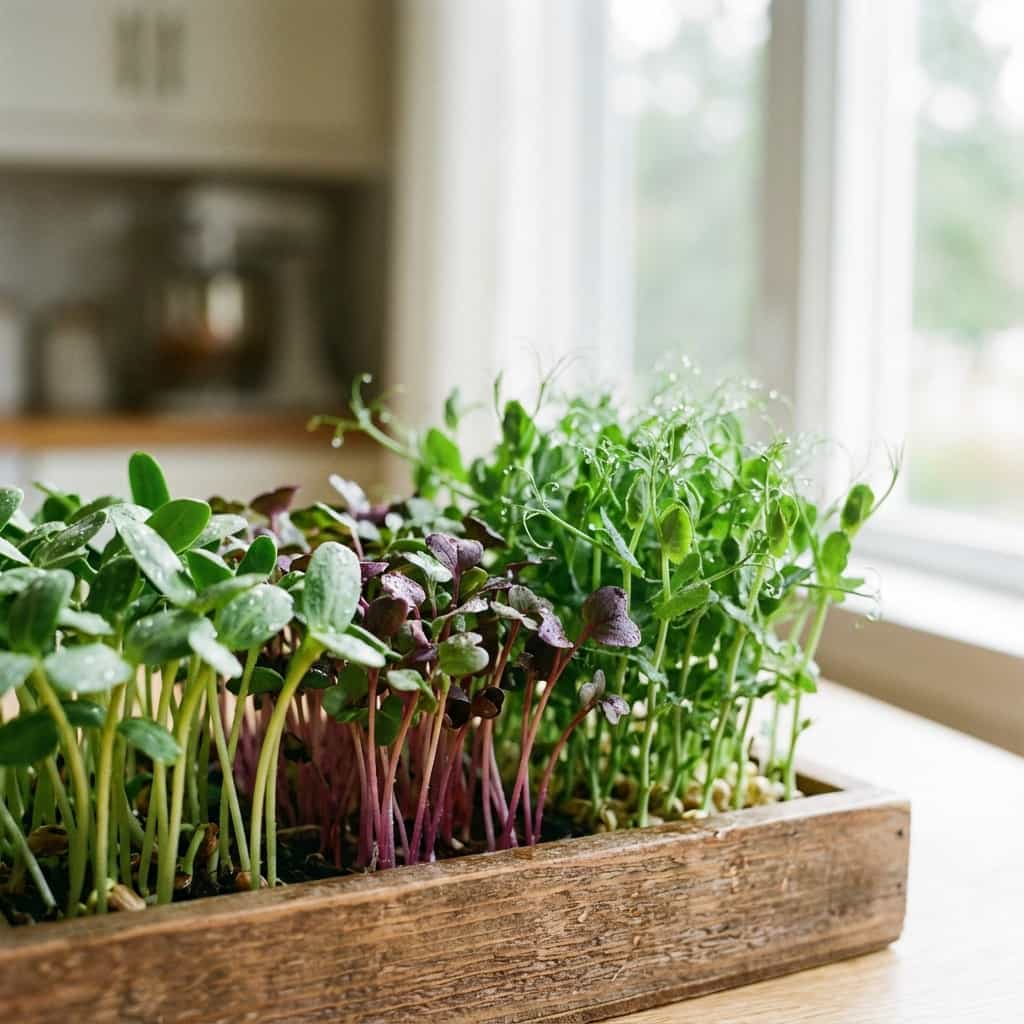
When to Harvest
The harvest window for microgreens is surprisingly narrow. Cut too early and you miss out on flavor development. Wait too long and bitterness creeps in, especially with brassicas like arugula and radish.
The universal signal: first true leaves. These are the second set of leaves that appear after the initial seed leaves (cotyledons). They look different — shaped like miniature versions of the mature plant's leaves. When you see them, your microgreens are ready.
Timing by Variety
Different varieties hit their peak at different times:
| Variety | Days to Harvest | Visual Cue |
|---|---|---|
| Radish | 6–8 days | Green leaves with pink-red stems |
| Arugula | 8–12 days | Bright green, serrated leaf edges |
| Broccoli | 8–12 days | Deep green with sturdy stems |
| Pea Shoots | 10–14 days | Tendrils and developed leaf pairs |
| Sunflower | 10–14 days | Thick stems, fully opened leaves |
| Kale | 10–14 days | Deep green, robust structure |
The Morning Advantage
Harvest in the morning if possible. Plants are fully turgid after a night of rest — their cells are full of water and nutrients. Afternoon harvests yield microgreens that are slightly wilted and have reduced crunch.
Cutting Technique
Use clean, sharp scissors. Dull blades crush stems instead of cutting cleanly, which accelerates spoilage.
- Cut just above the soil line — you want stem without growing medium
- Harvest in small sections rather than all at once to maintain freshness throughout the week
- Sanitize scissors between different varieties to prevent cross-contamination
Post-Harvest Handling
- Rinse gently in cool water to remove any seed hulls or growing medium
- Dry thoroughly — a salad spinner works well. Excess moisture is the enemy of shelf life
- Store at 5°C (41°F) — Research shows this temperature maintains antioxidant activity and sensory quality for up to 14 days
- Use a breathable container — Partially open containers or containers with small holes prevent moisture buildup
The Regrowth Question
Some varieties can regrow after cutting — pea shoots are the most reliable for a second harvest. Most brassicas (radish, broccoli, kale) won't produce a worthwhile second crop. It's usually better to start fresh with new seeds.