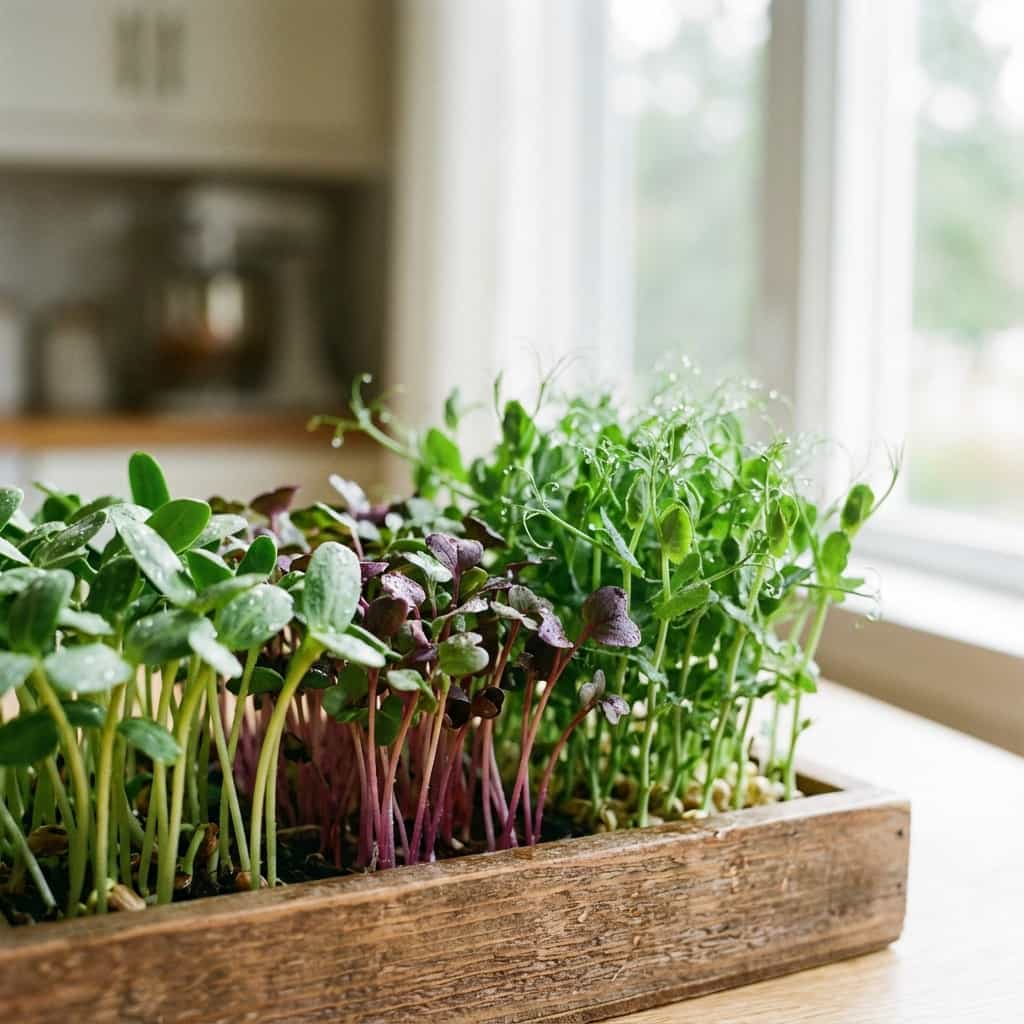
Why Microgreens Deteriorate So Quickly
Microgreens are living tissue. After you cut them, they're still metabolically active — respiring, releasing ethylene, and consuming their own stored sugars. The faster this process runs, the faster quality declines.
Three factors accelerate spoilage:
- Moisture on the surface — wet greens create anaerobic pockets where bacteria and mold thrive
- Ethylene exposure — certain produce (apples, bananas, avocados) releases ethylene gas, which ages cut greens rapidly
- Temperature — every 10°C increase in storage temperature roughly doubles the rate of deterioration
Controlling these three factors is the entire job of post-harvest storage.
The Golden Rule: Dry First, Refrigerate Second
The most common storage mistake is putting wet microgreens directly into a container. Even a small amount of surface moisture will cause greens to wilt and develop a slimy layer within 24–48 hours.
Step-by-step process:
- Harvest in the morning when plants are fully turgid
- Rinse gently in cool water to remove growing medium particles or seed hulls
- Spin dry in a salad spinner — two or three spins
- Spread on a clean kitchen towel or paper towels for 15–30 minutes
- Once completely dry, transfer to your storage container
- Refrigerate at 4–5°C (39–41°F)
Choosing the Right Container
| Container Type | Verdict | Why |
|---|---|---|
| Airtight plastic container with paper towel liner | Best for most | Paper towel absorbs any residual moisture; airtight slows oxidation |
| Clamshell produce containers | Good | Natural ventilation prevents CO₂ buildup; widely available |
| Glass jars (loosely lidded) | Good | Inert material; won't off-gas; easy to see contents |
| Sealed zip-lock bags | Avoid | No moisture control; greens compress and bruise |
| Reusable silicone bags | Acceptable | Better than zip-lock, but still prone to moisture retention |
Pro tip: Place a dry paper towel or piece of clean cloth at the bottom of any container. Replace it if it becomes saturated.
Temperature and Ethylene: The Hidden Enemies
Research from the USDA post-harvest lab confirms that 4–5°C is the optimal storage temperature for most microgreen varieties — it significantly slows both respiration and microbial growth while preserving antioxidant content.
Avoid storing microgreens near:
- Apples and pears (high ethylene emitters)
- Bananas (very high ethylene)
- Avocados and tomatoes
Store them near:
- Other leafy greens, herbs, or vegetables with low ethylene sensitivity
Shelf Life by Variety
Different varieties have different post-harvest durability:
| Variety | Typical Shelf Life | Notes |
|---|---|---|
| Radish | 5–7 days | Fast to wilt; use first |
| Pea shoots | 7–10 days | Sturdy; holds texture well |
| Sunflower | 7–10 days | Thick stems maintain crunch |
| Broccoli | 10–14 days | Very stable post-harvest |
| Kale | 10–14 days | Tough leaves resist wilting |
| Basil | 3–5 days | Highly sensitive; do not refrigerate below 10°C — cold injury causes blackening |
Basil is the exception: it's cold-sensitive. Store at 10–15°C (50–59°F) instead of standard refrigerator temperatures, or keep it in a glass of water at room temperature like fresh herbs.
Harvesting for Storage vs. Immediate Use
If you're harvesting to store, adjust your technique:
- Harvest slightly earlier — cotyledon stage rather than true leaf stage retains firmness longer
- Skip the rinse if you know the growing medium is clean — rinsing introduces moisture that must be fully removed
- Smaller portions — harvest only what you'll use in a few days rather than the whole tray at once; the uncut tray stays fresh far longer than cut and stored greens
Reviving Wilted Microgreens
If stored greens have wilted but are not yet slimy or discolored, they can often be revived:
- Submerge in a bowl of ice-cold water for 5–10 minutes
- Drain and spin dry
- Use immediately — do not re-refrigerate
This works because wilting is often water loss, not cellular damage. The cold water shock helps cells reabsorb moisture and regain turgor.
When to Discard
Discard microgreens if you notice:
- Slimy or wet texture anywhere in the container
- Off smell (sour, ammonia-like, or musty)
- Brown or black discoloration spreading from the stems
- Mold growth (any fuzzy patches)
Surface moisture without any of the above signs is not necessarily a problem — dry the greens and check again after an hour.
The best microgreens are the ones eaten freshest. When in doubt, use them — and start a new tray.