The Gut Microbiome in Brief
Your gastrointestinal tract houses an estimated 38 trillion microbial cells — roughly equal to the total number of human cells in the body. These bacteria, fungi, and other microorganisms collectively form the gut microbiome, and they're involved in nearly everything: digesting fiber, producing vitamins, regulating immune responses, and even synthesizing neurotransmitters like serotonin and dopamine.
The diversity and composition of this microbial community is shaped by what you eat — specifically, the types of plant compounds that reach your colon. This is where microgreens become relevant.
Dietary Fiber: The Foundation
Microgreens, like all plant foods, contain dietary fiber — both soluble and insoluble forms. While the fiber content per serving is modest compared to whole grains or legumes, the type of fiber matters as much as quantity.
Research on mature brassica vegetables (broccoli, kale, cabbage) — which share the same fiber compounds as their microgreen counterparts — shows that these fibers are particularly well-fermented by Bifidobacterium and Lactobacillus species, two of the most studied beneficial bacteria in the gut.
Varieties with the highest fiber content:
- Pea shoots — highest total fiber among common microgreens
- Sunflower — good source of insoluble fiber supporting transit time
- Lentil microgreens — oligosaccharides that function as prebiotics
Glucosinolates and Gut Protection
Brassica microgreens (broccoli, radish, kale, mustard, arugula) are rich in glucosinolates — sulfur-containing compounds that become biologically active during chewing or digestion. When gut bacteria metabolize these compounds, they produce isothiocyanates, including sulforaphane.
What sulforaphane does in the gut:
- Activates the Nrf2 pathway, which regulates antioxidant enzyme production in gut epithelial cells
- Shows inhibitory effects on Helicobacter pylori — the bacteria responsible for peptic ulcers — in laboratory and clinical studies
- Appears to reduce intestinal inflammation markers in animal models of colitis
Broccoli microgreens contain roughly 50 times more glucoraphanin (the glucosinolate precursor to sulforaphane) than mature broccoli — making them one of the most concentrated dietary sources of this compound.
Important: The conversion of glucosinolates to active isothiocyanates requires the enzyme myrosinase, which is present in the plant but destroyed by cooking. Eat brassica microgreens raw to preserve this pathway. Chewing thoroughly also helps — it ruptures cell walls and brings myrosinase into contact with glucosinolates.
Polyphenols and Microbial Diversity
Plant polyphenols — flavonoids, anthocyanins, phenolic acids — are among the most studied compounds for their prebiotic-like effects on gut bacteria. They're not well-absorbed in the small intestine; instead, they travel largely intact to the colon, where gut bacteria break them down into smaller metabolites that have local and systemic effects.
Microgreens with notable polyphenol content:
- Red cabbage — high in anthocyanins; animal studies show anthocyanin supplementation increases Akkermansia muciniphila, a bacterium associated with gut barrier integrity
- Beet — betacyanins (responsible for red color) are emerging as modulators of microbial composition
- Amaranth — rich in rutin and quercetin, phenolic compounds studied for anti-inflammatory effects in the colon
A 2023 review in Nutrients found that dietary polyphenols broadly increased microbial diversity — the key marker of a healthy microbiome — while reducing the relative abundance of Clostridium perfringens and other potentially harmful species.
The Short-Chain Fatty Acid Connection
When gut bacteria ferment both fiber and polyphenols from plant foods, they produce short-chain fatty acids (SCFAs) — primarily acetate, propionate, and butyrate. These compounds are essential:
- Butyrate is the primary energy source for colonocytes (colon cells) and plays a key role in maintaining the gut lining's integrity
- Propionate travels to the liver and influences glucose metabolism
- Acetate is used by peripheral tissues and muscles
A diet that consistently supplies fermentable fiber and polyphenols keeps SCFA production active. Microgreens can contribute to this, particularly as part of a varied plant-rich diet.
Practical Strategies for Gut Health
Eat the Full Rainbow
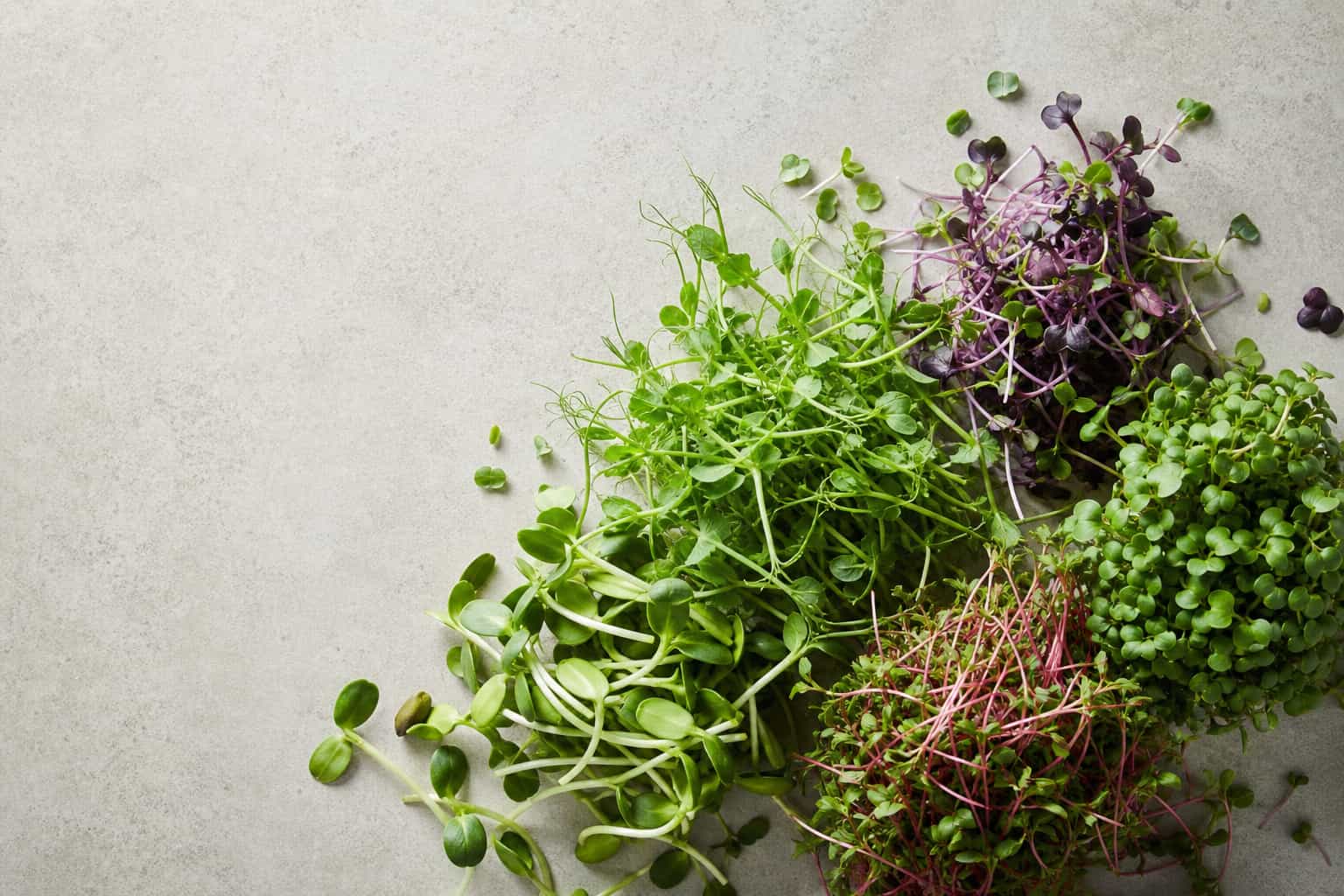
Different microgreen colors correspond to different phytonutrient classes. Rotating varieties ensures a broader range of compounds reaching your gut microbiome:
| Color | Representative Varieties | Key Compounds |
|---|---|---|
| Dark green | Broccoli, kale, arugula | Glucosinolates, chlorophyll, vitamin K |
| Red/purple | Red cabbage, amaranth, beet | Anthocyanins, betacyanins |
| Yellow-green | Pea shoots, sunflower | Carotenoids, vitamin E, fiber |
| White/pale | Fennel, lentil | Phenolic acids, prebiotic oligosaccharides |
Pair with Fermented Foods
The nutrition science post covered this, but it bears repeating in context: yogurt, kefir, kimchi, and other fermented foods contain live bacteria that complement the prebiotic compounds in microgreens. The prebiotic feeds the probiotic — combining both in the same meal or the same day is genuinely synergistic.
Aim for Consistency, Not Quantity
A tablespoon of broccoli microgreens on a daily smoothie does more for gut health than an occasional large serving. The microbiome responds to consistent dietary inputs, building populations of bacteria suited to the substrates they regularly receive.
What We Don't Yet Know
The gut microbiome research on microgreens specifically is still developing. Most human studies use mature vegetables, and the extrapolation to microgreens — even when the same compounds are present in higher concentrations — involves some assumptions.
What's clear is that microgreens are genuinely plant-rich, polyphenol-dense foods with a composition that aligns with what the broader gut microbiome literature identifies as beneficial. They're not a standalone intervention, but as part of a diet with diverse plant foods, they're a meaningful contribution.