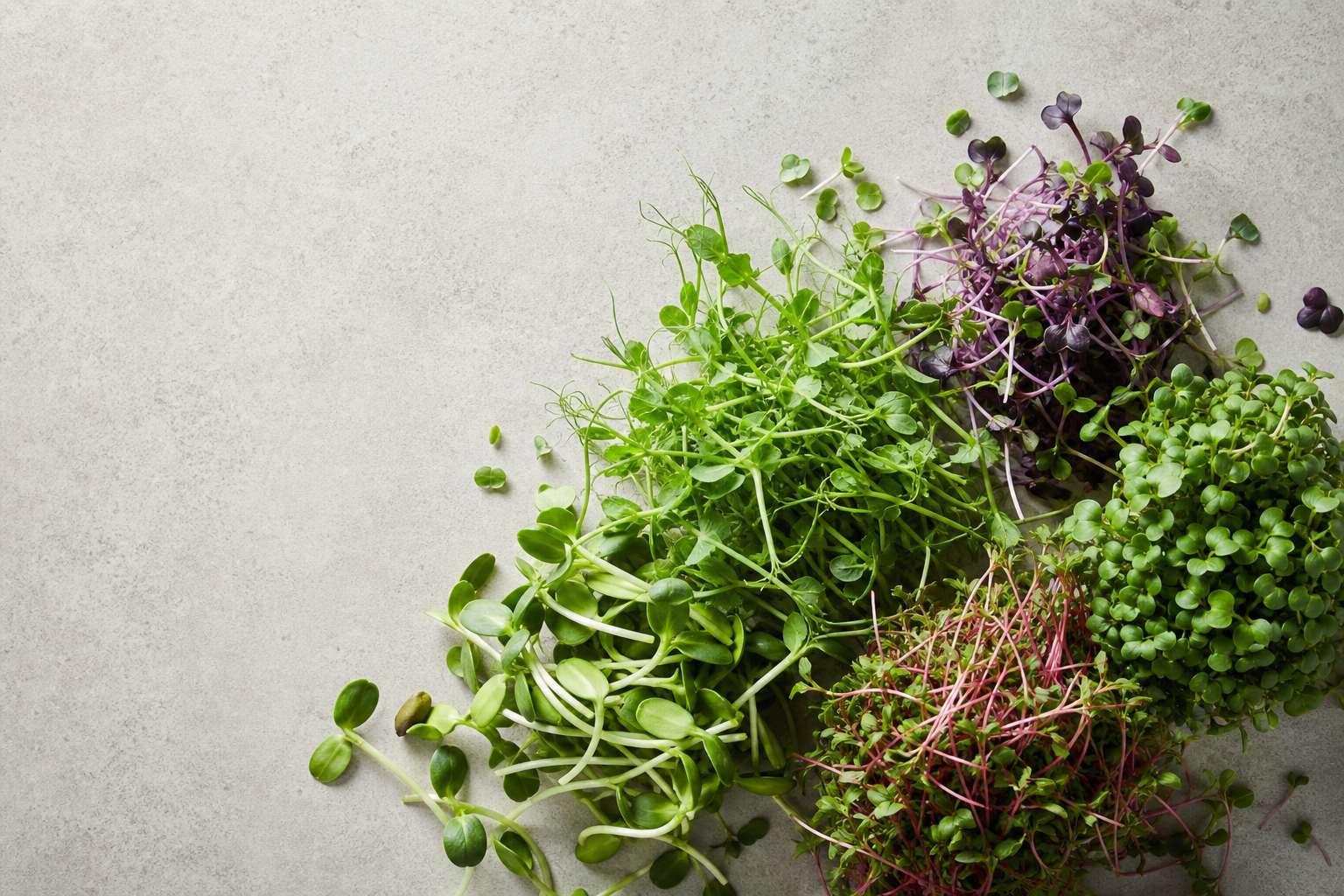
The Nutrition Science Behind Microgreens
Answer in brief
Microgreens contain up to 40x more vitamins than mature vegetables. Explore what the research actually says — and which varieties deliver the most.
The 40x Claim
You'll see this number everywhere: microgreens contain "up to 40 times" more nutrients than mature vegetables. This comes from a landmark 2012 USDA study that analyzed 25 microgreen varieties for four key nutrient groups: ascorbic acid (vitamin C), carotenoids, phylloquinone (vitamin K), and tocopherols (vitamin E).
The "40x" figure specifically applies to red cabbage microgreens vs. mature red cabbage for vitamin C content. It's the ceiling, not the average. On average across varieties, microgreens contain roughly 5 times more vitamins and carotenoids than their mature counterparts.
That's still remarkable — but precision matters when we're talking about nutrition science.
Standout Varieties
Broccoli — The Sulforaphane Source
Broccoli microgreens are famous for their glucoraphanin content — a precursor to sulforaphane, a compound studied extensively for its role in activating detoxification enzymes and suppressing cancer cell growth.
Key fact: the enzyme myrosinase, which converts glucoraphanin to sulforaphane, is destroyed by heat. Eat broccoli microgreens raw for maximum benefit.
Sunflower — Mineral Powerhouse
Sunflower microgreens lead in zinc (956 µg/100g) and calcium (145 mg/100g) among tested varieties. They also deliver 67.55 mg/100g of vitamin C — on par with oranges.
Red Cabbage — The Antioxidant Champion
Beyond the vitamin C headline, red cabbage microgreens contain 69 times more vitamin K than mature red cabbage and 6 times more vitamin C. The anthocyanins responsible for their color are powerful antioxidants.
Pea Shoots — Complete Protein
At 5.4g protein per 100g with all essential amino acids, pea shoots are among the richest plant-based protein sources in the microgreen world. They also deliver 2,593 IU of vitamin A per 100g.
Maximizing Nutritional Value
Research points to several factors that affect nutrient density:
- Eat them raw — Heat destroys myrosinase and degrades vitamin C
- Harvest at first true leaves — This is when phytochemical concentration peaks
- Pair with fats — Fat-soluble vitamins (A, E, K) absorb better with dietary fat
- Add vitamin C — Citrus juice or vitamin C-rich foods increase iron absorption
- Consume quickly — Nutrient levels decline after harvest, though cold storage (5°C) preserves quality for up to 14 days
The Fermented Dairy Effect
An interesting finding: pairing microgreens with fermented dairy (yogurt, kefir) can increase iron absorption by up to 68%, calcium absorption by 57%, and zinc absorption by 23%. The combination of probiotics and organic acids in fermented dairy enhances mineral bioavailability.
What the Science Doesn't Say
It's worth noting what remains uncertain:
- Long-term health outcomes from regular microgreen consumption haven't been studied in large clinical trials
- Nutrient content varies significantly based on growing conditions, variety, and harvest timing
- "More nutrients per gram" doesn't necessarily mean you'll eat enough to make a clinical difference — you'd need to consume meaningful quantities regularly
Microgreens are a genuinely nutrient-dense food. They're not a miracle cure. Including them as part of a varied diet is a sound, evidence-based approach to nutrition.