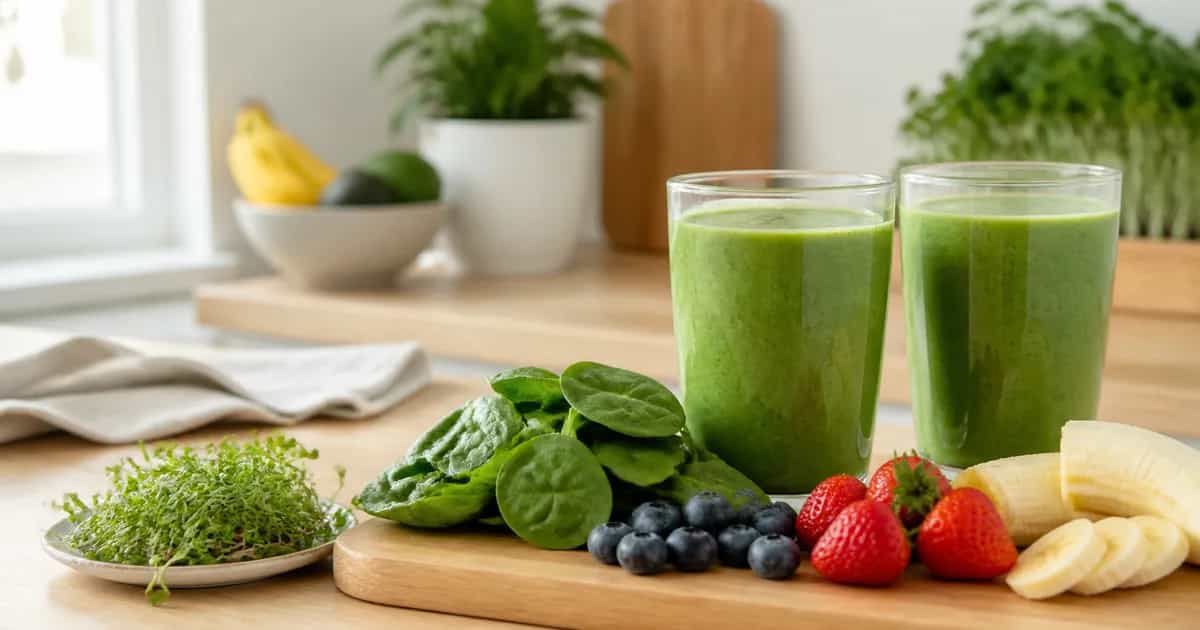
Start with a formula
For one smoothie, combine:
- 1 cup liquid;
- 1–1½ cups fruit;
- ¼–½ cup mild microgreens to start;
- one protein-containing ingredient;
- optional ice, spice, or acid.
This is a flexible meal formula, not a detox treatment. Microgreens add flavor and plant variety; the rest of the smoothie determines much of its energy, protein, sugar, and texture.
1. Berry-broccoli smoothie
Blend 1 cup kefir or fortified soy drink, 1 cup frozen berries, half a banana, and ¼ cup broccoli microgreens. Add water for a thinner texture. Berries cover mild brassica notes without requiring added sugar.
2. Pineapple-pea smoothie
Blend 1 cup yogurt drink or fortified plant drink, 1 cup frozen pineapple, ½ banana, ¼ cup tender pea shoots, and lime. Remove tough tendrils first. Pea shoots can be more fibrous, so blend thoroughly.
Read the pea nutrition guide.
3. Apple-basil green smoothie
Blend 1 cup milk or unsweetened plant drink, one chopped apple, half a banana, a small handful of basil microgreens, and a pinch of cinnamon. Basil is aromatic; begin with less than you would use of spinach.
See the basil benefits and flavor guide.
4. Mango-sunflower blend
Blend 1 cup yogurt or soy drink, 1 cup frozen mango, lemon juice, and a small handful of sunflower microgreens. Trim thick lower stems. Add oats or nut butter if the smoothie is intended as a fuller breakfast.
Read the sunflower nutrition guide.
5. Cucumber-radish savory smoothie
Blend cucumber, plain yogurt or kefir, a small amount of radish microgreens, lemon, dill, and cold water. Season lightly. This is closer to a drinkable cold soup than a sweet smoothie.
Use the radish nutrition guide to understand the crop.
Choose the right microgreen
| Desired result | Start with |
|---|---|
| Mild and easy | Broccoli, kale |
| Sweet-green | Pea shoots |
| Nutty and substantial | Sunflower, trimmed well |
| Herbal | Basil, cilantro |
| Peppery | Radish or arugula, in a small amount |
The taste guide helps refine the choice.
Avoid these mistakes
- Do not use a smoothie to consume a huge unfamiliar amount at once.
- Do not assume blending “detoxes” the body.
- Do not rely on fruit-only blends for protein.
- Do not use spoiled or slimy greens.
- Do not copy dry seed nutrition into the finished drink.
For serving context, read how much microgreens should you eat?, carbs and macros, and all recipes.