Quick answer
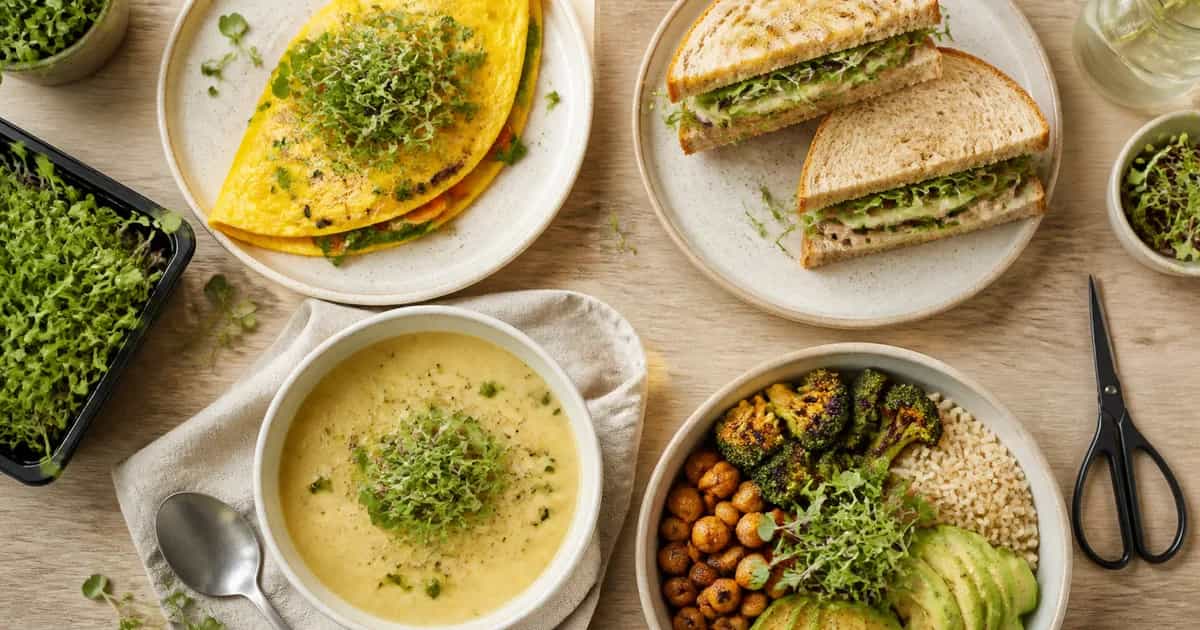
Put microgreens on foods that benefit from freshness, gentle crunch, herb aroma, or peppery contrast. Add most varieties at the end of cooking. Use delicate crops as a finish and substantial sunflower or pea shoots as part of the leafy volume.
15 practical uses
Breakfast
- Eggs: Add broccoli, kale, or radish microgreens after cooking an omelet or scramble.
- Avocado toast: Pair creamy avocado with peppery radish or arugula.
- Savory yogurt bowl: Top yogurt, cucumber, olive oil, and chickpeas with herb-like basil or cilantro microgreens.
- Smoothie: Blend a modest amount of mild broccoli, pea, or sunflower greens with fruit and a protein-containing liquid.
Use the smoothie guide for proportions.
Lunch
- Sandwich: Replace part of the lettuce with sunflower, pea, or broccoli microgreens.
- Wrap: Combine hummus, grated vegetables, and sturdy shoots.
- Grain bowl: Add any crop after the hot grain cools slightly.
- Soup: Finish lentil, tomato, potato, or vegetable soup with a fresh handful.
Try the hummus flatbread and soup topping.
Dinner
- Pasta: Finish lemon pasta with basil, arugula, or mild broccoli microgreens.
- Tacos: Use radish or mustard microgreens with beans, fish, chicken, or roasted vegetables.
- Noodle bowl: Pair radish, sunflower, or pea shoots with sesame dressing.
- Roasted vegetables: Add beet, amaranth, or basil microgreens after plating for color and aroma.
Open the lemon pasta and sesame noodle bowl.
Snacks and sauces
- Pesto: Blend with basil, nuts or seeds, lemon, oil, and cheese or nutritional yeast.
- Dip plate: Serve microgreens beside hummus, labneh, or bean dip and whole-grain crackers.
- Cold salad: Combine one mild and one peppery crop rather than using an unbalanced single variety.
Use the microgreens pesto, taste guide, and full recipe collection.
Match the crop to the job
| Crop style | Best roles |
|---|---|
| Mild brassica | Smoothies, eggs, soups, sandwiches |
| Peppery radish/mustard/arugula | Toast, tacos, rich sauces, cheese |
| Substantial sunflower/pea | Wraps, salads, bowls, noodles |
| Delicate beet/amaranth | Cold plates, salads, visual finish |
| Aromatic basil/cilantro | Pasta, tomato, fruit, sauces |
Handling and leftovers
Store greens cold and dry, keep them away from raw-meat contamination, and use clean hands and utensils. Add dressing just before serving. If a crop is limp but not spoiled, blend it into pesto; discard slime, foul odors, or visible spoilage.
Read how to store microgreens, food safety, and how much to eat.