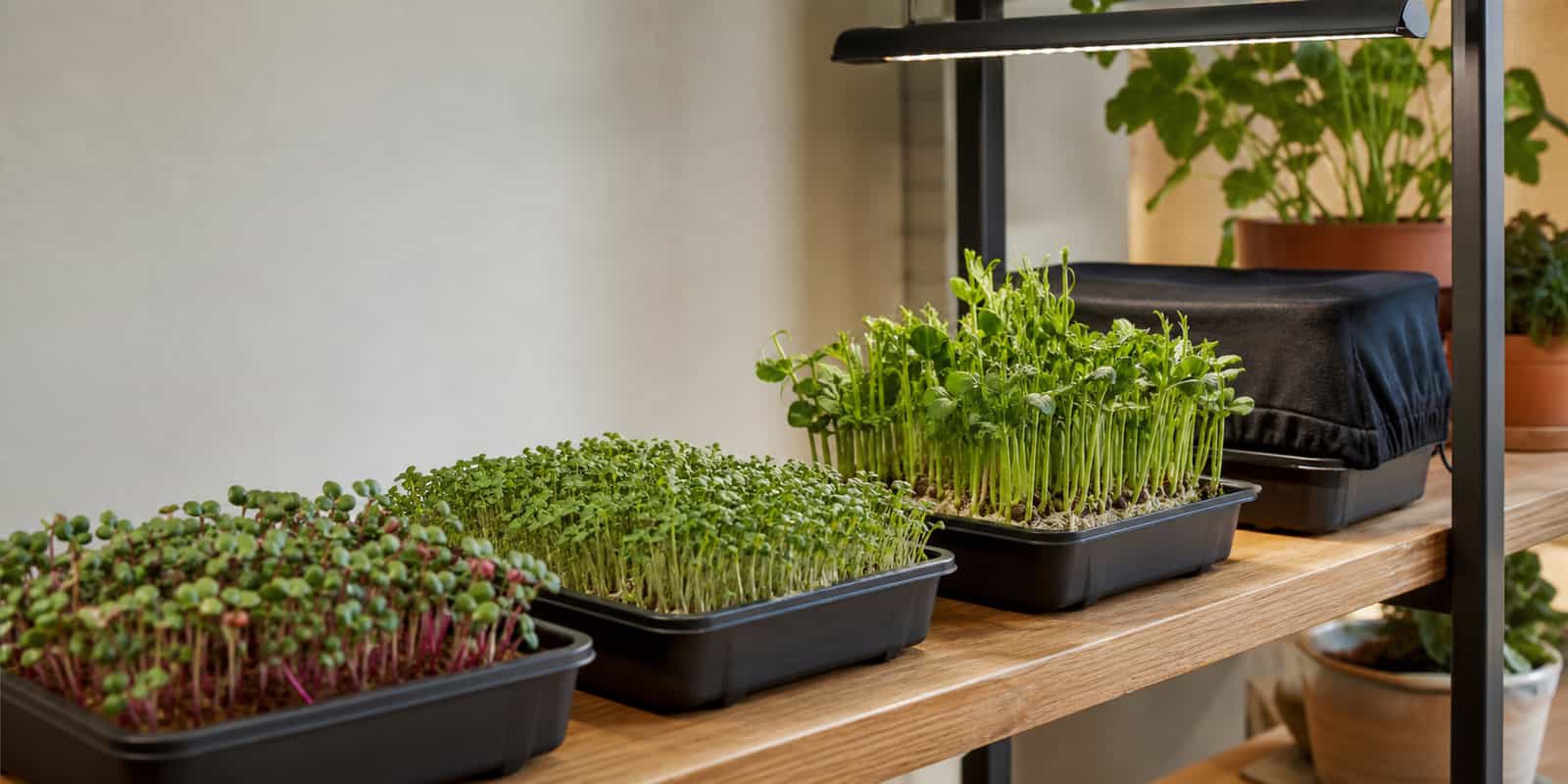
Microgreens Food Safety: Reducing Mold and Bacterial Risks
Microgreens are fresh and often eaten raw, so hygiene must be central to production. Use traceable seed, safe water, sanitized trays, clean hands, and adequate airflow. Dense sowing and constantly wet surfaces may increase risk.
What to do when mold is suspected
Do not try to rescue a suspicious crop by smelling it or cutting away only the visible area. Isolate the batch, clean the equipment, and investigate the cause. Check other batches grown under the same conditions.
Harvest and delivery
Clean packaging, rapid cooling, and suitable delivery conditions matter after harvest. Batch codes, harvest times, and delivery records make an investigation possible if a problem occurs. Commercial growers should confirm local food-safety requirements with the relevant authority.
This article is not medical or regulatory advice. If a crop appears unsafe, do not consume it and seek professional guidance.
FAQ: Can moldy microgreens be washed and eaten? Answer: They should not be assumed safe; isolate the batch and investigate the cause.