Growing Microgreens in Vertical Farming: How to Plan a Rack System
Vertical farming uses several growing layers within the same floor area. Microgreens fit this model because their harvest cycle is short, but adding more shelves does not automatically create more profit or yield.
Basic rack equipment
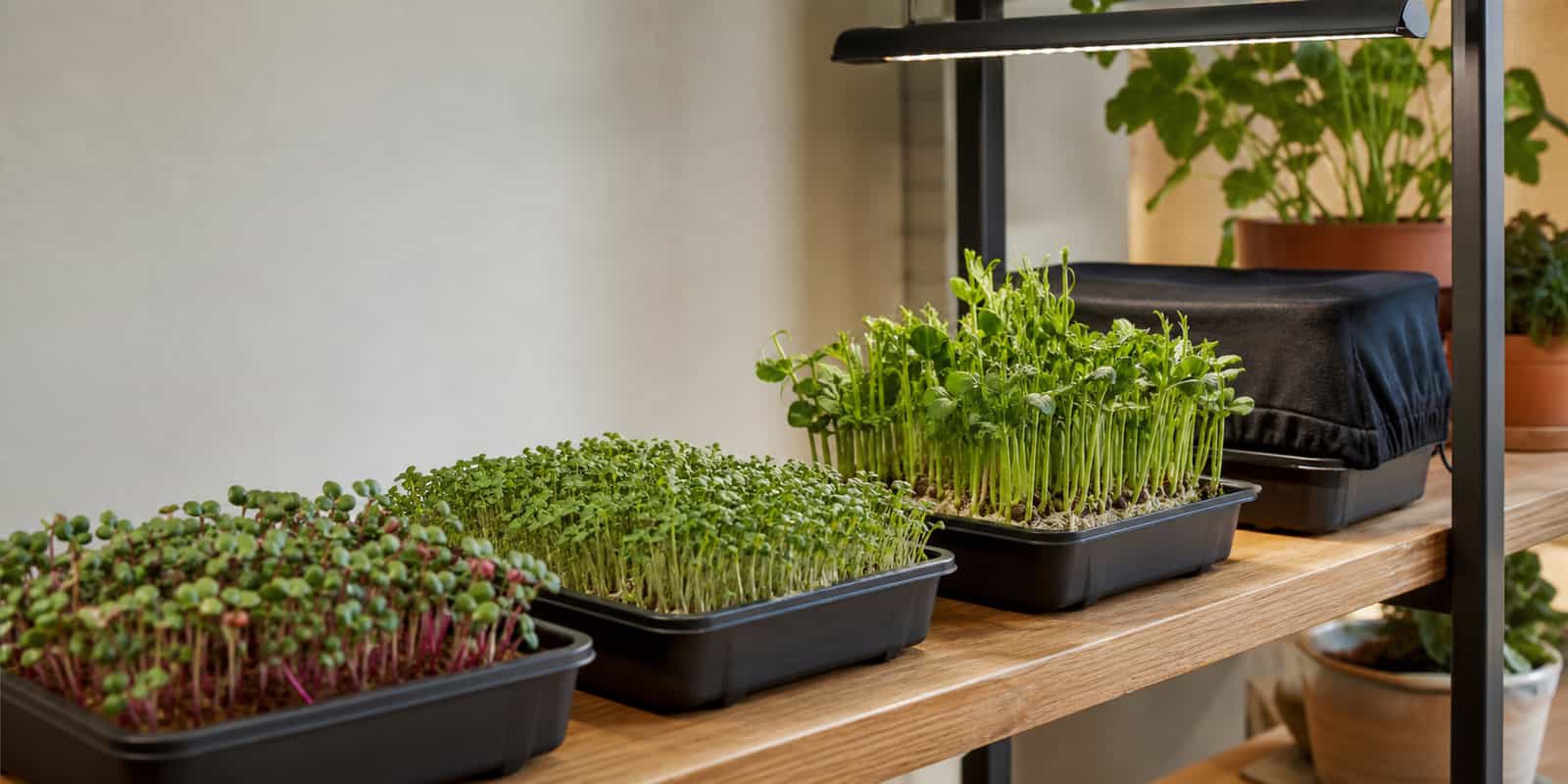
A modular rack, food-safe trays, timer-controlled LED lights, a fan, a thermometer-hygrometer, and a washable work surface are a practical starting point. Plan shelf spacing around plant height, light distribution, and safe access during watering and harvest. Keep electrical connections away from water.
Monitor each layer
Top and bottom shelves may receive different temperatures and light levels. Grow the same variety on different shelves and compare germination, height, color, and yield. Bottom watering may reduce surface moisture, but overflow protection and reservoir hygiene remain essential.
Calculate the real cost
Include electricity, consumables, cooling, crop loss, cleaning, and harvest labor in the tray cost. A yield-per-square-meter claim is incomplete without these inputs. Test a small setup before making a large rack investment.
FAQ: How many shelves should a beginner use? Answer: Start with the smallest system your demand and available time can support consistently.