Quick answer
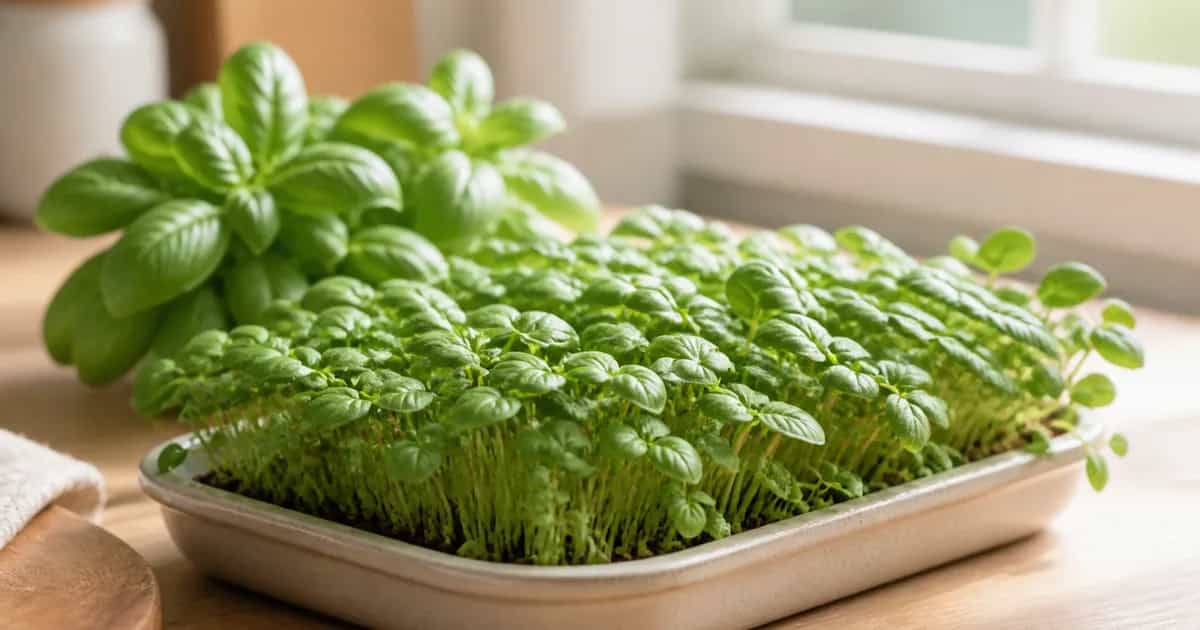
Basil microgreens offer an immediate culinary benefit: intense herb aroma in a tender, edible form. They also contribute vitamins, minerals, pigments, and aromatic plant compounds. Current evidence does not justify presenting a garnish-sized serving as a treatment for inflammation, infection, or chronic disease.
Nutrition evidence
Basil cultivars have appeared in broad microgreen vitamin research. The key finding across dozens of varieties is variability. Green basil, purple basil, and different harvest systems should not be assumed to share one fixed profile.
A source is more useful when it identifies:
- basil species and cultivar;
- green or purple phenotype;
- harvest day;
- light and growing conditions;
- fresh or dry weight;
- compounds directly measured.
Use the microgreens vitamin guide and nutrition facts guide to assess a chart.
Flavor is a real benefit
Nutrition marketing often overlooks sensory value. Basil microgreens can make tomato, pasta, eggs, soup, cheese, beans, fruit, and cold drinks more appealing without requiring a heavy sauce. That practical role can help diversify meals.
Varieties may taste sweet, clove-like, citrusy, or spicy. The exact aroma depends on genetics and growing conditions. Explore the taste guide, microgreen pesto recipe, and recipe collection.
What health claims can we make?
A plant extract showing antimicrobial or antioxidant activity in a laboratory is not the same as eating a normal serving of fresh microgreens. Concentration, digestion, metabolism, and dose all matter. Use language such as “contains measured plant compounds,” not “cures” or “detoxes.”
Read are microgreens healthy? and the functional-food evidence guide for claim boundaries.
Serving and storage
Use basil microgreens as a fresh herb: a small handful on a plate or a measured cup in a larger recipe. Add after cooking. Store dry and cold in a clean container; wash according to the producer’s directions and local food-safety guidance.
For more uses, see everyday microgreen meals and meal ideas.
Growing notes
Basil is slower and warmer-loving than radish. The seeds become mucilaginous, so soaking is usually unhelpful. Sow on a fine level surface, mist carefully, provide warmth and light, then avoid saturated media. Use the basil variety profile, temperature guide, and germination troubleshooting guide.
Bottom line
Basil microgreens provide strong flavor, color, and measurable plant nutrients. Their culinary usefulness is clear; medical claims require far stronger human evidence.