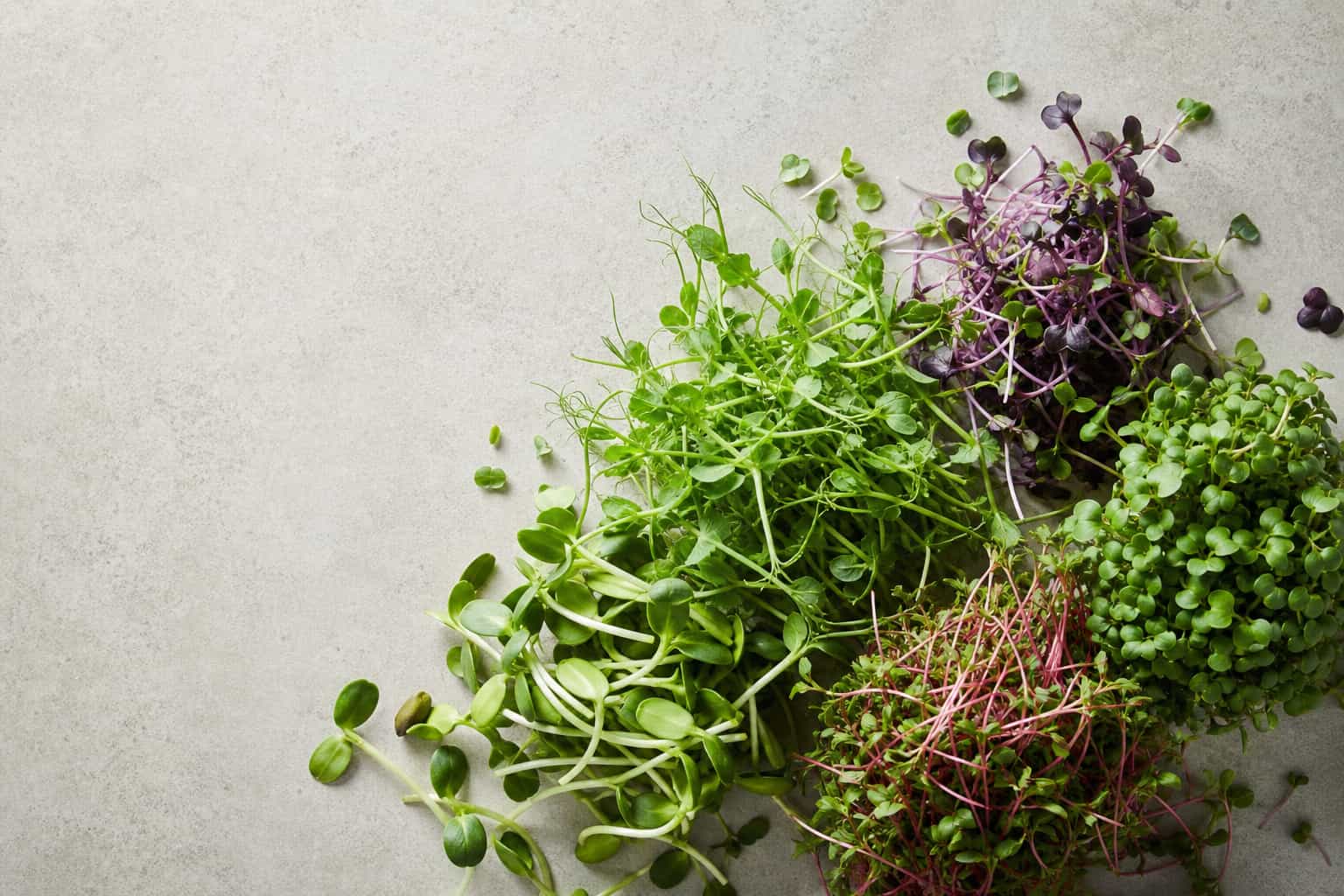
Which vitamins and minerals do microgreens contain?
Microgreens can contain vitamin C, vitamin K, carotenoids (provitamin A compounds), vitamin E, calcium, potassium, magnesium, and iron. The exact amount depends on the crop and sample, so the most honest answer is a variety-by-variety range, not one universal microgreens number.
Nutrient highlights by variety
| Variety | Nutrients commonly highlighted in the site data |
|---|---|
| Radish | Vitamin C, folate, potassium |
| Broccoli | Vitamin C, vitamin K, folate |
| Arugula | Vitamin K, calcium, vitamin C |
| Pea shoots | Carotenoids, vitamin C, iron |
| Sunflower | Vitamin E, magnesium, selenium |
| Kale | Carotenoids, vitamin C, vitamin K |
These labels help you choose a crop to explore; they do not mean that one serving meets a recommended daily intake.
Why results vary
The USDA study that made microgreen nutrition widely known analyzed 25 commercial varieties and found substantial variation between crops. Light exposure, cultivar, harvest age, growing medium, and laboratory method all matter. “Up to” values should never be presented as an average for every tray.
For vitamin K or other nutrients that may interact with a medication, use the advice of a qualified clinician and the nutrition panel of the food you actually buy or grow.
Source and data method
This article summarizes the site’s comparison table and the USDA Agricultural Research Service publication by Xiao, Lester, Luo, and Wang (2012). Mineral context is checked against later USDA research and FoodData Central documentation. Values are educational estimates and should not replace individualized dietary advice.