Quick answer
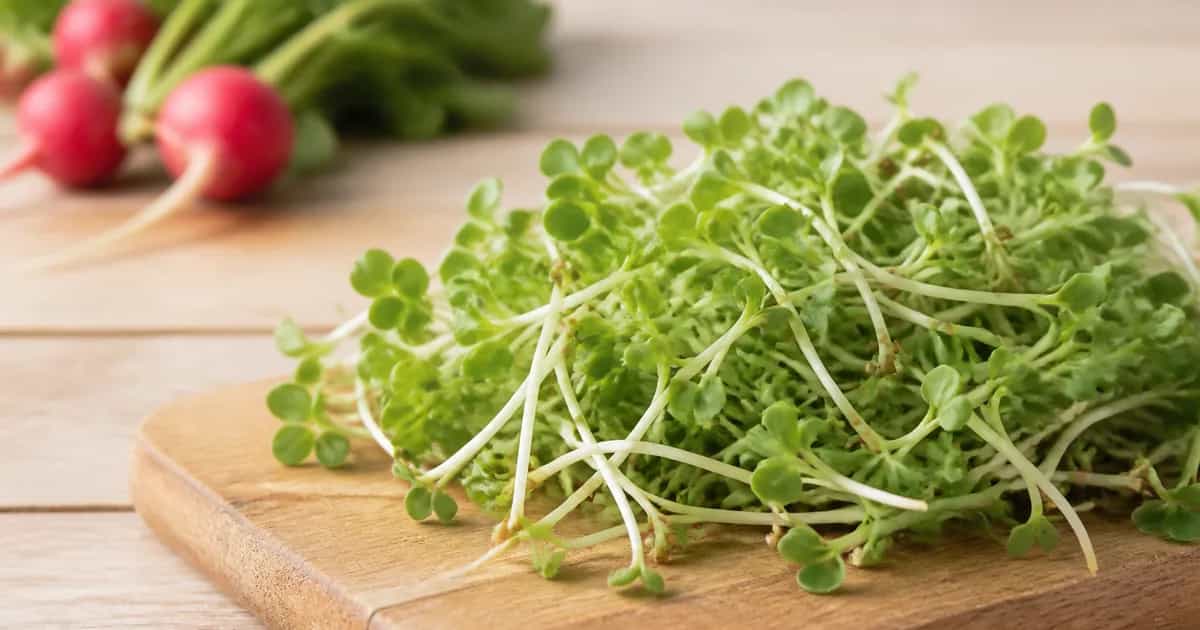
Radish microgreens contain measurable vitamin C, minerals, pigments, and other plant compounds. Studies can report results per 100 g fresh weight, but the value belongs to the tested cultivar and growing system. A black radish result, for example, should not silently become the label for every daikon, red-stemmed, or purple radish microgreen.
What 100 g means
One hundred grams is a laboratory comparison unit, not necessarily a normal garnish-sized serving. Radish microgreens are light and airy, so 100 g may represent a large volume. Use the unit to compare studies only when both results use the same fresh-weight basis.
If one study reports dry weight, the water has been removed and the number will appear much higher. Do not compare it directly with fresh food. Our microgreens nutrition per 100 g guide explains the conversion problem.
What research supports
Controlled studies have included radish microgreens in analyses of:
- vitamin C and other vitamins;
- macro- and microminerals;
- sugars and organic acids;
- pigments and phenolic compounds;
- antioxidant assays.
These measurements show composition, not automatic disease prevention. The result can also shift with cultivar, light, salinity, nutrient supply, temperature, and harvest stage.
For vitamin-specific interpretation, read the vitamin and mineral guide and vitamin K guide.
Radish versus mature radish
Microgreens and mature roots differ in plant part, age, water distribution, and edible structure. A value for raw radish root from a food database cannot be relabeled as radish microgreens. Likewise, a seed or sprout value does not automatically apply.
The fair comparison keeps crop stage, unit, and analytical method visible. See microgreens versus mature vegetables for a practical framework.
Serving and flavor
Radish microgreens bring peppery heat in a small amount. Start with a loose handful on avocado toast, eggs, tacos, sandwiches, noodle bowls, or salads. The flavor varies from mild daikon-like types to sharper purple and red cultivars.
Use radish microgreen recipes, taste pairings, and the full recipe collection to turn the crop into a real meal rather than a decorative afterthought.
Growing a comparable crop
Radish is fast and beginner-friendly, but sowing density and light still change stem length and harvested water content. Follow the radish growing guide, radish variety profile, and harvest guide.
Bottom line
Radish microgreens have useful crop-specific research and can be described as a nutrient-containing fresh food. A 100 g result is valid only with its cultivar, method, and fresh- or dry-weight basis attached.