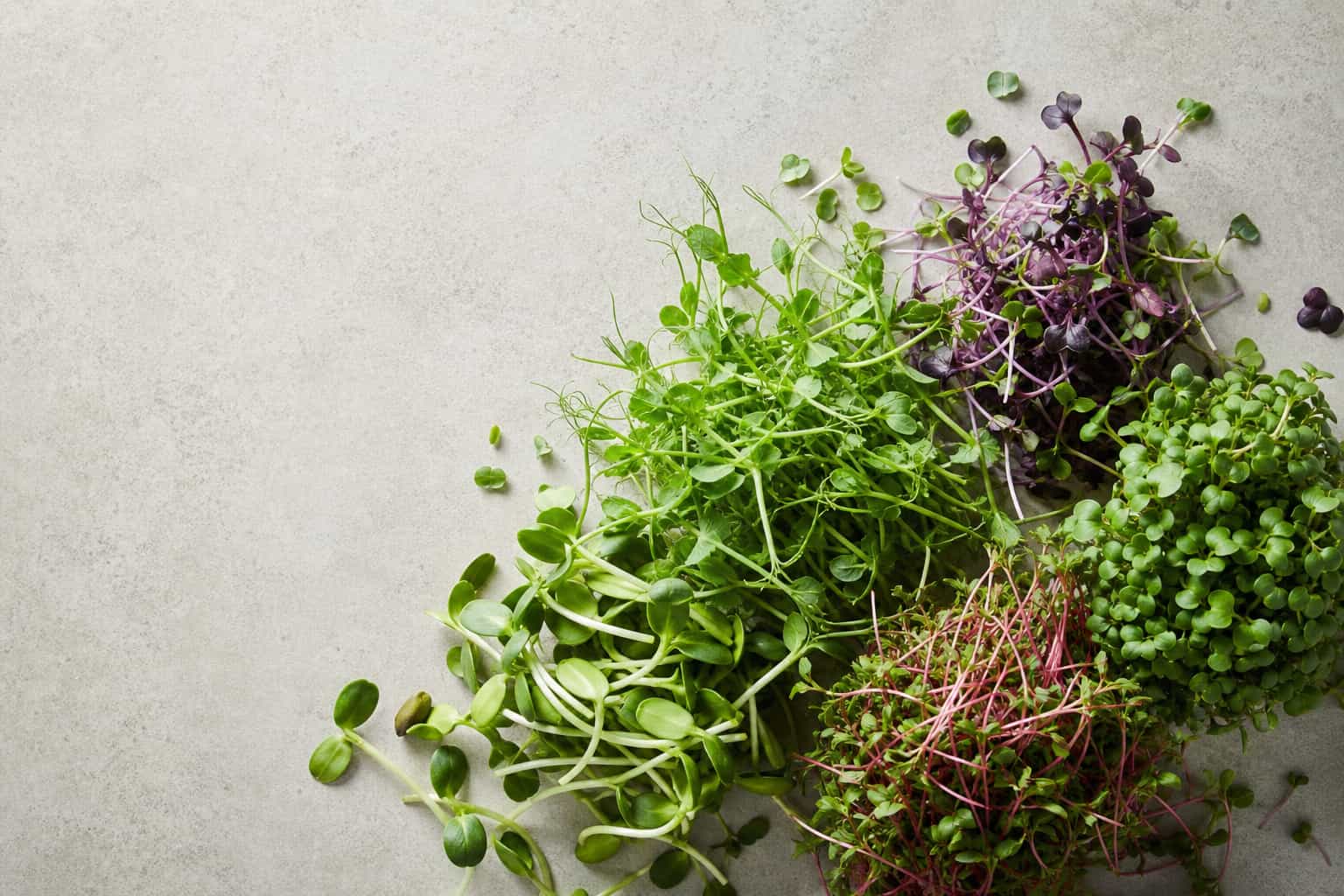
Are microgreens more nutritious than mature vegetables?
Sometimes, for specific nutrients and specific varieties—but there is no single multiplier that applies to every microgreen. Microgreens are harvested shortly after germination, while mature vegetables continue developing for much longer. Their nutrient profiles, water content, serving sizes, and preparation methods are therefore different.
The meaningful differences
| Question | Microgreens | Mature vegetables |
|---|---|---|
| Harvest stage | Days to a few weeks after germination | Fully developed plant or harvest organ |
| Flavor | Concentrated, often peppery or nutty | Usually milder or more familiar |
| Portion | Often a small handful or topping | Often a full side or ingredient portion |
| Evidence | Strongest for specific crops and compounds | Broader food-composition coverage |
| Best use | Fresh topping, salad, sandwich, garnish | Base of a meal, cooked dish, or large salad |
The USDA research behind the “up to 40 times” headline measured selected vitamins and carotenoids in selected crops. It did not mean that every microgreen has 40 times every nutrient of its mature counterpart.
How to compare fairly
- Compare the same nutrient and the same unit, usually per 100 g.
- Check whether the sample was raw, dried, cooked, or blended.
- Consider the portion you actually eat.
- Prefer a product’s tested label when a packaged food is involved.
- Treat study averages as references, not a guarantee for a home tray.
Microgreens and mature vegetables work best together: a small handful adds color and flavor, while mature vegetables provide volume and variety.
Source and data method
The comparison uses the USDA ARS microgreen study and the site’s per-100g table. The editorial rule is to name the measured nutrient and sample context rather than repeat a generalized health claim. This is nutrition education, not medical advice.