Quick answer
Microgreens contain carbohydrates, including sugars, structural carbohydrates, and fiber, but there is no defensible single carb number for “microgreens.” Broccoli, sunflower, pea, beet, and basil are different crops with different water content and composition.
For accurate tracking, use a verified label for the product you eat or a crop-specific laboratory source that identifies fresh weight. Do not average unrelated crops into a fake universal entry.
What counts as a macro?
Macronutrients usually refer to carbohydrate, protein, and fat. Fiber is a carbohydrate category handled differently in labeling and energy calculations. Water makes up much of fresh microgreen weight but is not a calorie-providing macro.
| Metric | Question to ask |
|---|---|
| Total carbohydrate | Is fiber included according to the reporting system? |
| Fiber | Was it measured directly, and on fresh weight? |
| Sugars | Which sugars and laboratory method? |
| Protein | Was nitrogen converted with a stated factor? |
| Fat | Was the fresh edible shoot analyzed, not the dry seed? |
| Calories | Were they measured or calculated from verified macros? |
See the dedicated protein guide, fiber guide, and calorie guide.
Why online macro tables conflict
Common causes include:
- values copied from mature vegetables;
- seed values mislabeled as microgreens;
- fresh and dry weights mixed;
- sprouts grouped with microgreens;
- one crop presented as all crops;
- calories calculated from incomplete macros;
- serving sizes omitted.
A complete-looking row is not automatically a complete analysis. The nutrition facts per 100 g guide shows which major studies measured which fields.
Are microgreens low-carb?
Many fresh leafy foods are relatively low in energy by weight because they contain substantial water. That broad pattern does not replace a crop-specific value, and “low-carb” may have a legal definition in your market. A garnish-sized portion also contributes less total carbohydrate than 100 g simply because it is smaller.
If carbohydrate intake is medically important, use your product label and a dietitian or clinician’s guidance. This page cannot provide an individualized target.
Practical serving measurement
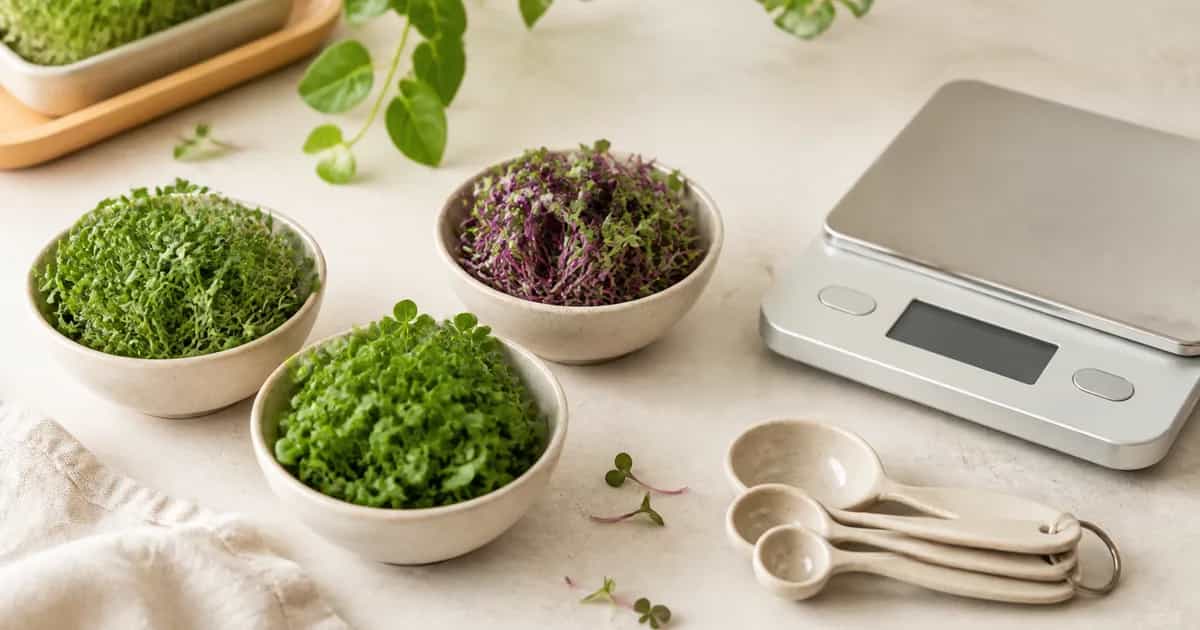
Volume is inconsistent because stem length and packing change the amount in a cup. A kitchen scale is better when precision matters. Weigh the edible portion after removing roots and growing medium, and record the exact product or crop.
Read how much microgreens should you eat? for serving context and microgreen meal ideas for balanced uses.
Bottom line
Microgreens have carbohydrates and other macros, but no universal macro label. Accurate tracking requires the right crop, edible stage, fresh-weight basis, and source.