Quick answer
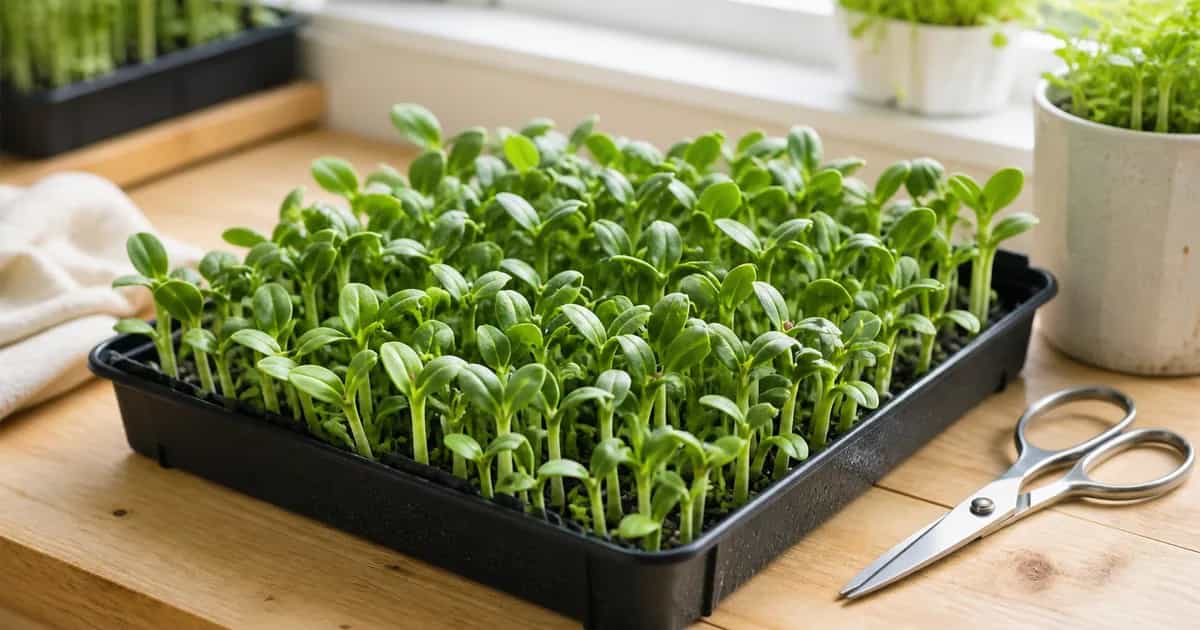
Harvest sunflower microgreens when the paired cotyledons are open and green, most seed hulls have fallen away, stems stand firmly, and the flavor is crisp rather than tough. Calendar age is only a guide. Temperature, light, seed lot, soak, density, and watering can move the harvest window.
Six-point harvest checklist
1. Cotyledons are fully open
The first paired leaves should be spread rather than folded tightly. A dense tray can look tall before the canopy is actually open, so inspect several areas.
2. Most hulls have released
Some hulls are normal. Brush the canopy gently with a clean hand before harvest. If many hulls remain firmly attached, give the crop more humidity during early emergence—not a heavy wash at harvest.
3. Stems are sturdy
Stems should hold the canopy upright. Very pale, stretched stems suggest insufficient light or an overly long blackout. Use the leggy microgreens guide if the tray collapses easily.
4. Flavor is still tender
Taste a clean sample from a representative area. The best point balances nutty flavor and crispness. Waiting for large true leaves can make some crops tougher or more fibrous.
5. Surface is reasonably dry
Avoid cutting immediately after overhead watering. A drier canopy is easier to handle and store. Water from below before harvest day when possible.
6. Crop is healthy
Do not harvest through slime, foul odor, or suspicious mold. Root hairs are usually concentrated around roots and disappear when wet; mold can spread across seed hulls or media and may smell musty. Use the mold guide and problem diagnosis.
A practical harvest window
Extension crop tables often show sunflower as a relatively fast microgreen, but the correct day depends on local conditions. Start checking daily once the canopy opens rather than treating one day number as a guarantee.
Record:
- seed supplier and lot;
- soak length;
- sowing weight and tray area;
- room temperature;
- blackout duration;
- light schedule;
- first day hulls release;
- chosen harvest day and yield.
The next tray becomes more predictable when you have your own record.
How to cut
Wash hands and sanitize food-contact tools according to their instructions. Use sharp clean scissors or a knife, cut above the medium, and avoid dragging soil or mat fibers into the crop. Transfer immediately to a clean container and cool promptly.
For the full process, read the harvest guide, storage guide, and food-safety guide.
Use the harvest
Fresh sunflower greens work in sunflower recipes, while their composition is covered in the sunflower nutrition guide. The complete crop workflow is in how to grow sunflower microgreens and the sunflower variety profile.
Bottom line
Use visual, tactile, flavor, dryness, and health checks together. A calendar starts the inspection; the crop decides the harvest.