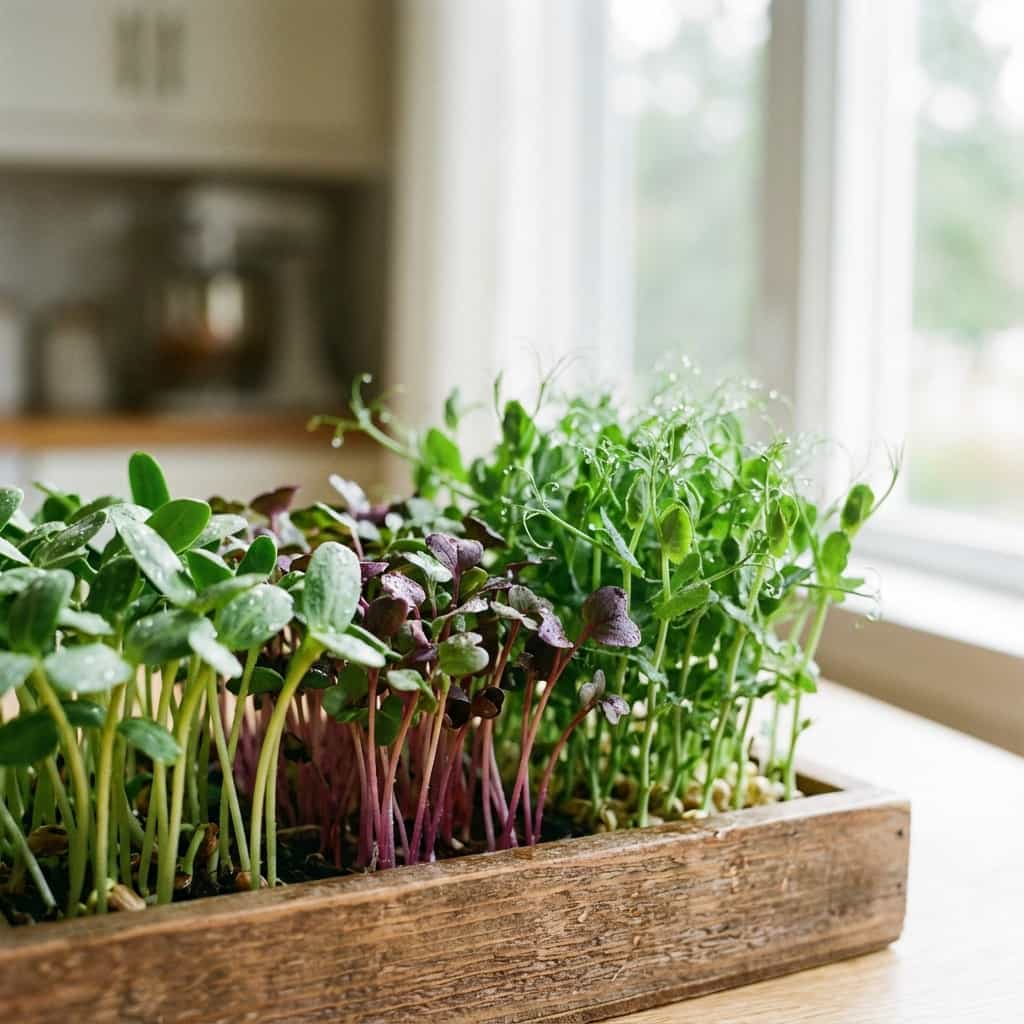
Mold vs. Root Hairs
First, the good news: what many beginners mistake for mold is actually root hairs — fine, fuzzy white filaments that emerge from the roots of young seedlings. They're completely normal and a sign of healthy growth.
The difference:
- Root hairs appear only at the base of stems, close to the growing medium. They're uniform and disappear when you mist with water.
- Mold appears anywhere — on seeds, stems, leaves, or the surface of the medium. It's often patchy, can be green/black/white, and has a musty smell. It doesn't disappear when misted.
If you're unsure, smell it. Root hairs have no odor. Mold smells distinctly off — musty, sour, or earthy in a bad way.
Why Mold Happens
Mold needs three things: moisture, warmth, and stagnant air. The blackout period for microgreens creates all three conditions in a confined space. Add in the organic matter of seeds and growing medium, and you have a mold-friendly environment.
The most common causes:
- Over-watering — The growing medium should be moist, not soaking
- Poor air circulation — Especially during the blackout period
- Contaminated seeds — Old or poorly stored seeds can carry mold spores
- Dirty equipment — Reusing trays without sanitizing
Prevention Strategy
Airflow is Everything
This is the single most important factor. Even during the blackout period, there should be some air exchange. Don't seal your trays completely — leave a small gap or use a dome lid with vents.
After the blackout period, a small fan on low speed creates enough circulation to keep mold at bay. Direct it near (not directly at) your trays.
Water Smart
- Bottom watering prevents moisture from sitting on leaves and stems
- Water in the morning so excess moisture evaporates during the day
- The medium should feel like a wrung-out sponge — damp, not dripping
Start Clean
- Sanitize trays with diluted hydrogen peroxide (3%) between grows
- Use fresh growing medium for each batch — don't reuse
- Store seeds in a cool, dry place in airtight containers
When Mold Appears
If you catch it early (small patch, limited area):
- Remove affected seedlings and a margin of healthy ones around them
- Increase air circulation immediately
- Reduce watering
- Spray the area lightly with diluted hydrogen peroxide (1 tsp per cup of water)
If the mold is widespread (covering more than a quarter of the tray):
Discard the entire crop. Sanitize all equipment thoroughly. Start fresh. The nutritional risk isn't worth trying to salvage heavily contaminated microgreens.
A Note on Food Safety
Mold on food-grade microgreens isn't just an aesthetic problem. Some molds produce mycotoxins that can cause illness. When in doubt, throw it out. Seeds are inexpensive. Your health isn't.