Quick answer
Mung bean microgreens contain water, carbohydrate, protein, minerals, vitamins, and plant bioactives. However, search results often mix dry mung beans, pale bean sprouts, and green microgreens. Those are different growth stages and cannot share one nutrition label.
Sprout or microgreen?
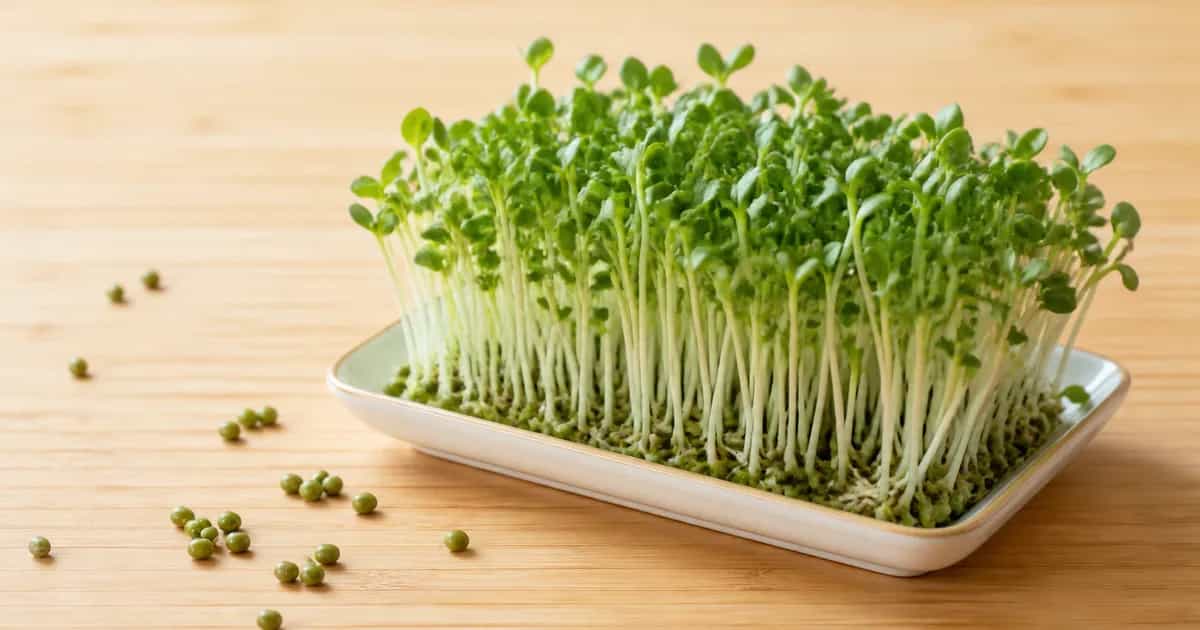
A typical mung bean sprout is grown with little or no light and eaten with the seed, root, and pale stem. A microgreen is grown in a medium or mat, exposed to light, and harvested above the root after cotyledons open. The extra growth, greening, water distribution, and harvested plant parts change the sample.
Before using a 100 g value, confirm that the paper actually says microgreens. The seed germination guide explains the stages, while the 100 g nutrition guide explains the units.
What research measured
One study grew 20 mungbean genotypes in Delhi and Leh-Ladakh. On a fresh-weight basis, vitamin C ranged from 32.37–36.00 mg/100g in Delhi and 61.11–88.63 mg/100g in Leh. The same experiment found wide mineral ranges and a clear location effect.
| Nutrient | Delhi-grown range | Leh-grown range | Weight basis |
|---|---|---|---|
| Vitamin C | 32.37–36.00 mg/100g | 61.11–88.63 mg/100g | Fresh weight |
| Potassium | 239–369 mg/100g | 323–475 mg/100g | Fresh weight |
| Calcium | 47–87 mg/100g | 42–57 mg/100g | Fresh weight |
| Magnesium | 36–56 mg/100g | 36–56 mg/100g | Fresh weight |
| Phosphorus | 66–87 mg/100g | 39–67 mg/100g | Fresh weight |
These ranges support a crop-specific profile and show that genotype and environment matter. They do not support copying a dry bean’s high protein and fiber values into a fresh microgreen table or treating the maximum as a guaranteed label value.
Protein and carbohydrate claims
Mung beans are legumes, but plant family alone does not determine a fresh serving claim. “High protein” has to be evaluated against a measured amount and applicable labeling rules. Water-rich shoots are less concentrated than dry beans.
For a fair comparison, use the protein evidence guide, high-protein microgreens guide, and carbohydrate and macros guide.
Food-safety perspective
Seeds germinate in warm, moist conditions that can also support microbial growth. Buy seed intended for edible production, clean hands and trays, use potable water, avoid cross-contamination, and refrigerate the harvested crop promptly. Discard slimy, foul-smelling, or spoiled greens.
Higher-risk individuals should follow local public-health guidance about raw sprouts and microgreens and ask a clinician when appropriate. Read the microgreens food-safety guide.
Serving ideas
Mung bean microgreens are mild and crisp. Add them to noodle bowls, sandwiches, salads, rice bowls, or stir-fries at the end of cooking. Use a modest portion first because texture can be more substantial than delicate brassica greens.
Browse microgreen meal ideas, everyday uses, and all recipes.
Bottom line
Mung bean microgreens need their own nutrition entry. Verify growth stage, fresh-weight basis, cultivar, and laboratory source; never substitute dry bean or conventional sprout values.
Evidence reviewed: 1 September 2026. This educational page is not medical advice.