Quick answer
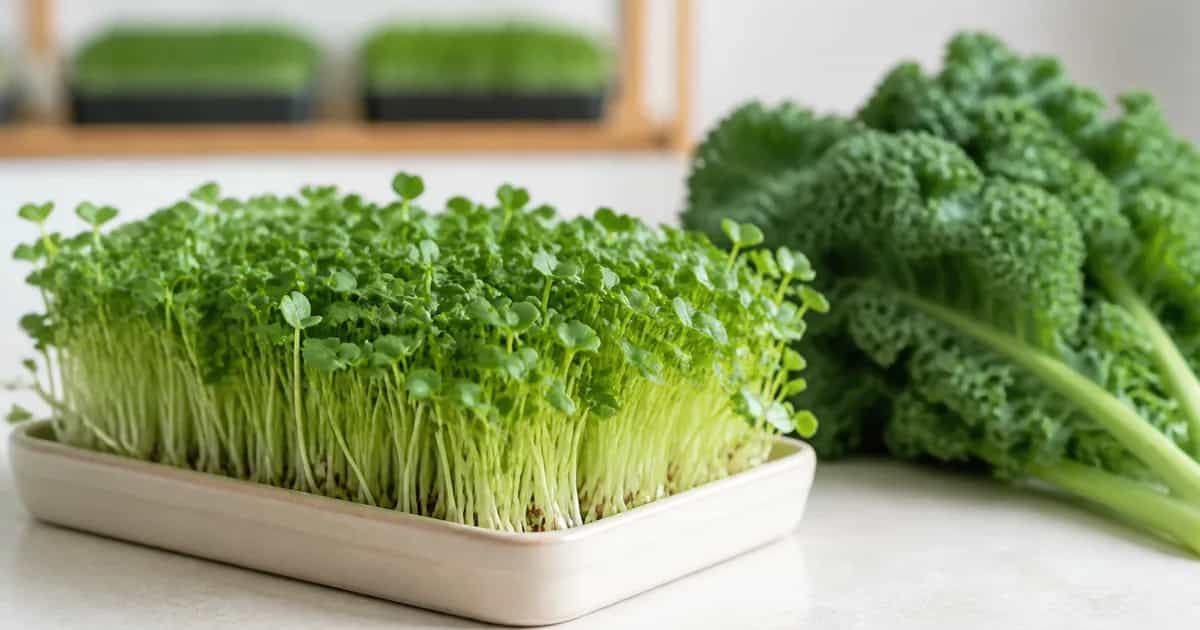
Kale microgreens are young Brassica plants with measurable vitamins, minerals, and plant bioactives. They are not simply “mature kale multiplied.” Their composition depends on cultivar, growth conditions, harvest timing, and whether results use fresh or dry weight.
What studies measured
Kale has appeared in research comparing sprouts and microgreens and in broader vitamin and mineral surveys. These studies measured different panels rather than one standardized Nutrition Facts label. A vitamin study may omit calories and protein; a mineral study may omit vitamins.
That is why a complete-looking online table can be misleading if it silently combines unrelated experiments. Review the 100 g nutrition guide before using any figure.
Kale microgreens and vitamin K
Phylloquinone is vitamin K1, a form found in green plants. Microgreen research has measured it across varieties, with substantial differences between crops. The result for one kale cultivar and system does not establish the value for every package.
People taking vitamin K–sensitive anticoagulant medication should follow their clinician’s advice about consistency rather than making abrupt dietary changes based on a blog. Read the microgreens vitamin K guide for a careful explanation.
Mature kale is not the same sample
Mature kale leaves and kale microgreens differ in age, structure, water content, and environmental exposure. Both can be nutrient-containing foods. The scientific question is not “which is always better?” but “what was measured, in which sample, and on what basis?”
Use microgreens versus mature vegetables for fair comparison rules and calories per 100 g for energy-data limits.
Taste and meal use
Kale microgreens usually taste milder than mature curly kale. Add them to eggs, sandwiches, grain bowls, soups after cooking, or blend a modest amount into a smoothie. Their tender structure needs less preparation than mature leaves.
See microgreen smoothie recipes, meal ideas, and all recipes.
Growing notes
Kale seed is small and usually sown dry. Aim for even density, prompt light, bottom watering after establishment, and airflow. Excessively dense stands can trap moisture. Use the kale variety profile, lighting guide, and watering guide.
Bottom line
Kale microgreens have legitimate vitamin and mineral research. Keep every number tied to its cultivar, harvest stage, unit, and method, and avoid treating “kale” as one unchanging nutrition profile.