Quick answer
There is no single “healthiest microgreen” for every person. Studies show substantial differences among crops, but nutrition is multidimensional: the leader in one vitamin may not lead in minerals, protein, flavor, yield, affordability, or suitability for your medication.
A practical best choice is a varied group you enjoy, handle safely, and eat consistently as part of balanced meals.
A better way to compare crops
Use five lenses instead of one superfood score:
- Evidence quality: Is the crop directly measured?
- Dietary role: Is it garnish, vegetable portion, or flavoring?
- Variety: Does it complement other foods and colors?
- Safety: Is it grown, stored, and handled cleanly?
- Personal context: Allergies, medications, and clinician advice matter.
The nutrition facts guide shows why studies cannot be collapsed into one universal chart.
Useful crop groups
| Goal | Crops to explore | Why they are practical |
|---|---|---|
| Mild beginner flavor | Broccoli, kale | Easy to add broadly; crop data exist. |
| Peppery flavor | Radish, arugula, mustard | A small amount changes a meal. |
| Substantial texture | Sunflower, pea | Larger shoots work in bowls and sandwiches. |
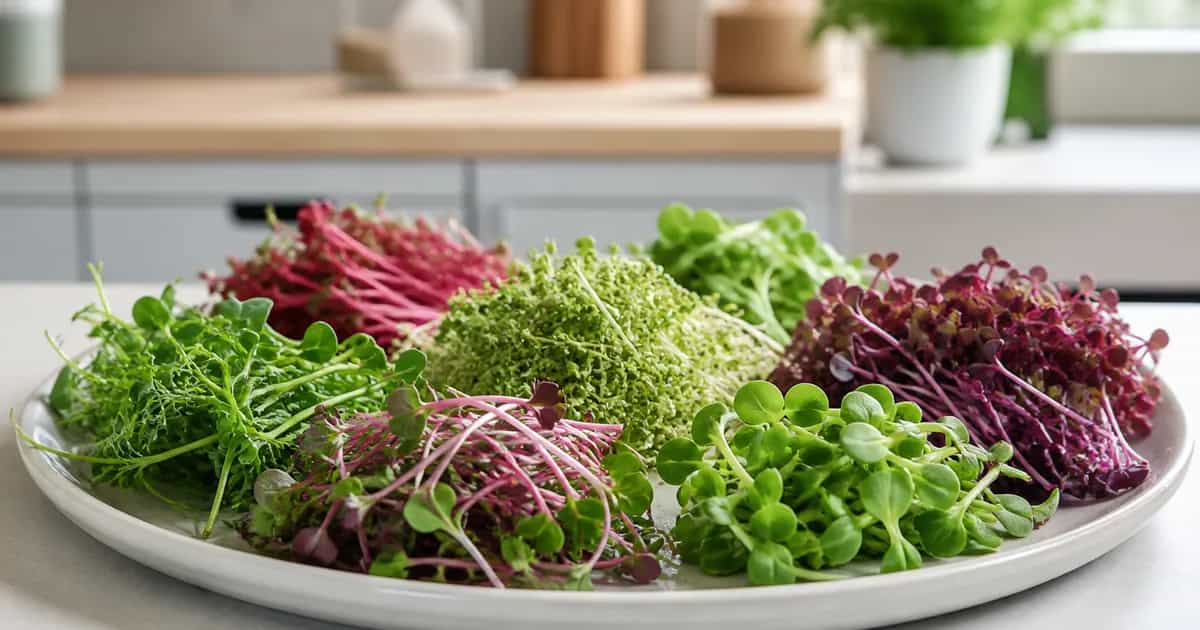
| Color contrast | Beet, amaranth | Strong visual variety and delicate texture. |
| Herb aroma | Basil, cilantro | Can replace or complement mature herbs. |
This is a culinary framework, not a medical ranking. Open the specific guides for broccoli, sunflower, radish, beet, and pea.
Why variety may beat a winner
Rotating plant families and colors changes flavor and the mix of compounds in your diet. It also reduces dependence on one online claim. Variety cannot guarantee a health outcome, but it is more consistent with balanced eating than treating one garnish as a cure-all.
See are microgreens healthy?, the vitamin guide, and the taste guide.
Safety and medication context
Use edible-production seed, clean water and equipment, refrigeration, and good hand hygiene. Discard spoiled crops. People who are pregnant, immunocompromised, very young, older, or managing medication should follow local food-safety and clinical guidance.
Vitamin K–sensitive anticoagulants make consistency especially important; read the vitamin K guide.
Turn choices into meals
Choose two or three varieties with different flavors, then use them on foods you already eat. The meal ideas guide and recipe collection make variety easier to sustain.
Bottom line
The best microgreens are not one winner. Choose evidence-backed, enjoyable crops; rotate colors and plant families; handle them safely; and keep medical claims separate from laboratory composition.