Quick answer
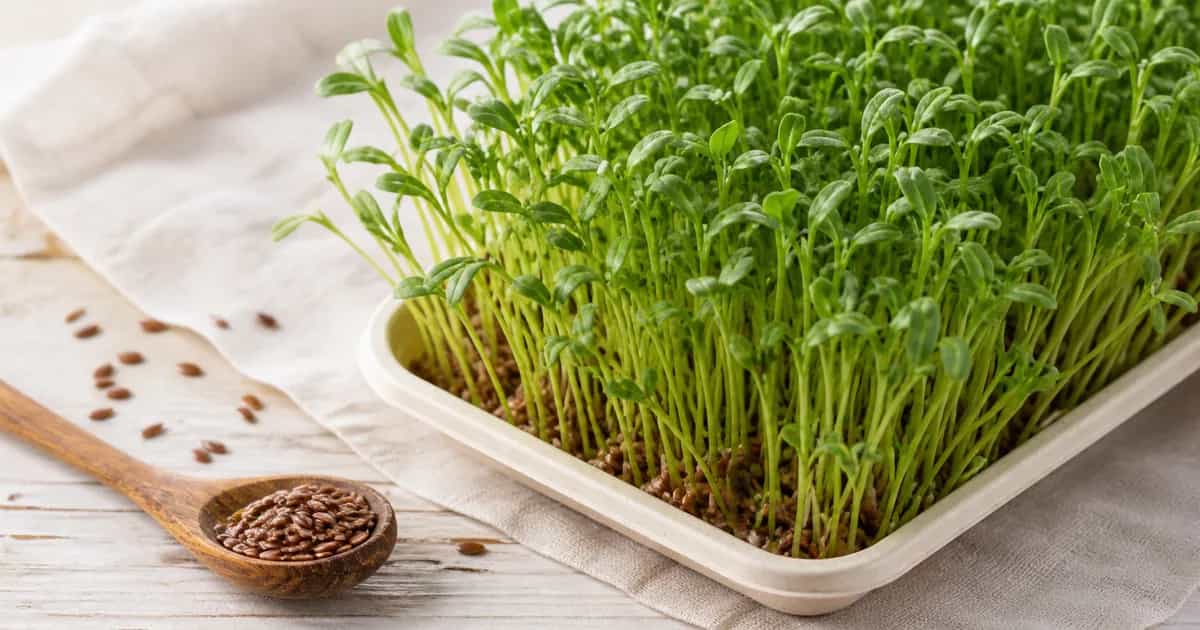
Flax microgreens are fresh shoots grown from flaxseed. They should not inherit the nutrition label of dry flaxseed. The seed is concentrated, low in water, and commonly discussed for oil, fiber, and lignans; the microgreen is a water-rich young plant with a different edible structure.
What research supports
Recent studies have compared flax microgreens with crops from Brassicaceae and Amaranthaceae under defined soilless conditions. Researchers measured morphological traits, basic nutrients, phenolic compounds, pigments, and antioxidant assays. The work confirms that flax microgreens can be analyzed as their own food and that plant family and medium influence results.
It does not create one globally valid calories, omega-3, protein, or fiber number for every flax tray. For the logic behind that limit, see the nutrition evidence guide.
Why flaxseed values do not transfer
Dry seed values are often expressed per 100 g of a concentrated, shelf-stable product. A fresh microgreen sample contains much more water and includes stems and leaves formed during germination. Even when some seed compounds remain relevant, concentration and bioaccessibility can change.
Avoid these common errors:
- copying a flaxseed nutrition panel into a microgreens article;
- calling the shoots a guaranteed high-omega-3 food without crop analysis;
- mixing dry-weight research with fresh-weight servings;
- assuming germination increases every nutrient.
Use our protein guide, fiber guide, and macro guide for unit-aware interpretation.
Texture and kitchen use
Flax seed produces mucilage when wet, so the crop can behave differently from radish or broccoli during establishment. Harvested shoots are delicate and mild. Use a modest amount in sandwiches, salads, cold bowls, or as a garnish; evaluate flavor and texture before putting a large quantity in a smoothie.
Find practical patterns in everyday microgreen meals, smoothie recipes, and the recipe collection.
Food-safety and growing notes
Because flax becomes gelatinous when wet, excessive surface moisture and dense sowing can reduce airflow. Use food-grade seed, clean trays, potable water, a level medium, and conservative watering. Do not eat a crop with persistent off-odors, slime, or suspicious growth.
Consult the seed germination guide, watering guide, and microgreen problems guide before experimenting.
Bottom line
Flax microgreens are a distinct fresh food, not flaxseed in leaf form. Current research supports crop-specific composition testing, while broad seed-based nutrition claims remain inappropriate without direct evidence.