Quick answer
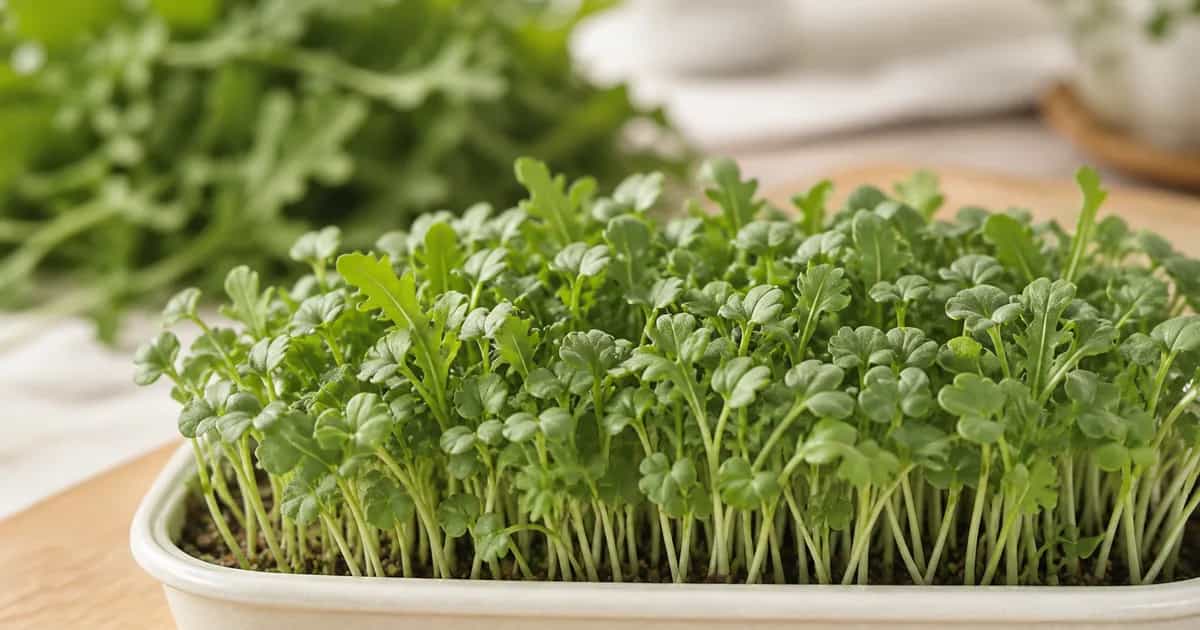
Arugula microgreens are young rocket plants with a peppery flavor. They contribute vitamins, minerals, and Brassicaceae phytochemicals, but the exact profile depends on the cultivar, light, nutrient solution, harvest stage, and fresh-water content. A mature arugula database entry is not a substitute for a microgreen analysis.
What the evidence can tell us
Multi-variety studies show that microgreens differ substantially even when researchers use the same laboratory. Vitamin and mineral datasets are valuable because they reveal this range, not because they create one permanent value for a crop name.
Arugula also belongs to the Brassicaceae family. That makes glucosinolates relevant to its plant chemistry, but a general family statement does not quantify a particular tray. Crop-specific analysis is still required.
For the measurement framework, read microgreens vitamins and minerals and the 100 g nutrition guide.
Arugula microgreens versus mature leaves
The microgreen is harvested around the cotyledon to first-true-leaf stage; mature arugula has a different leaf structure, water distribution, and growing history. Both can fit a varied diet, but their nutrition tables should not be swapped.
When comparing values, keep these labels visible:
- species and cultivar;
- microgreen or mature leaf;
- days after germination;
- fresh or dry weight;
- analyzed plant portion;
- laboratory method.
This is the same discipline used in our microgreens versus mature vegetables guide.
Flavor and serving ideas
Arugula microgreens are typically peppery, green, and slightly nutty. Use them with tomato, citrus, egg, cheese, mushrooms, lentils, pasta, or roasted vegetables. Add after cooking to keep the leaves lively.
A loose handful can flavor a plate without overwhelming it. For practical combinations, open the taste guide, everyday meal guide, and recipe collection.
Are there proven health benefits?
Eating a varied pattern rich in vegetables is well supported. A composition study can show that arugula microgreens contain particular compounds, but it cannot by itself prove that this specific food prevents or treats a condition. Be cautious with articles that jump from an antioxidant assay to a clinical promise.
Our balanced health guide separates nutrient presence, laboratory activity, and human outcomes.
Growing notes
Arugula seed is small and usually does not need soaking. Sow evenly, keep the surface moist but not saturated, introduce light promptly after germination, and use airflow to limit weak growth. See the arugula variety profile, lighting guide, and mold prevention guide.
Bottom line
Arugula microgreens combine distinctive flavor with measurable plant nutrients. Describe them with crop-specific evidence, not borrowed mature-leaf values or broad disease claims.