Quick answer
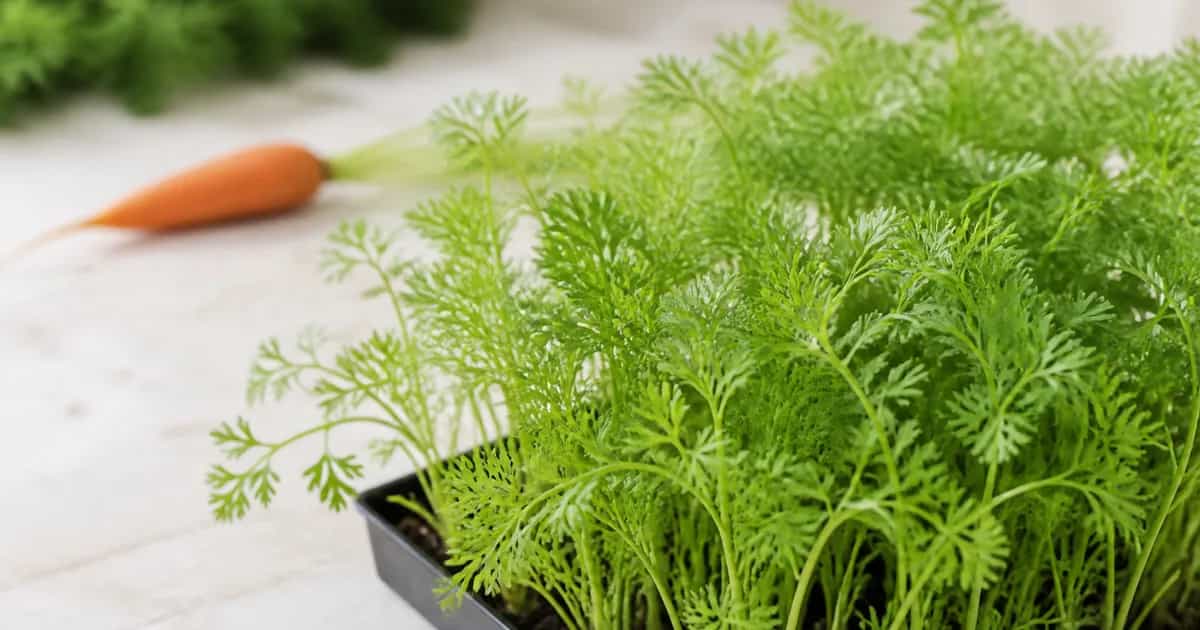
Carrot microgreens are harvested shoots with slender stems and feathery leaves. They are not miniature carrot roots. A raw carrot nutrition entry—especially its root-focused carbohydrate and carotenoid values—cannot be copied into a carrot microgreens article without direct shoot analysis.
What can responsibly be said?
Microgreen research demonstrates wide variation in vitamins, carotenoids, and minerals across species. Carrot shoots are green photosynthetic tissue, so their composition is expected to differ from the storage root. Exact claims still require a study that identifies carrot microgreens, cultivar, harvest age, unit, and method.
When crop-specific data are sparse, the honest answer is to explain the gap rather than fill it with mature-vegetable numbers. Use the nutrition facts guide and vitamin and mineral guide to evaluate sources.
Root versus shoot
The mature carrot root stores energy and pigments in a thickened underground organ. Microgreens consist mainly of cotyledons, young true leaves, and stems. Plant part alone can reshape the nutrition profile.
Ask these questions before trusting a table:
- Does the source say carrot microgreens?
- Was the edible shoot cut above the medium?
- Is the result fresh weight?
- Is beta-carotene directly measured or merely assumed from the crop name?
- Are calories and macros from the same sample?
See microgreens versus mature vegetables for a fair comparison.
Flavor and kitchen use
Carrot microgreens are aromatic and herb-like, with a flavor that can suggest carrot tops more than sweet roots. Use them in salads, soft cheese, eggs, fish, soups after cooking, or as a finishing herb on roasted vegetables.
Start small, because the aroma can be stronger than mild broccoli microgreens. Browse the taste guide, microgreen meal ideas, and recipe collection.
Growing notes
Carrot can be slower than radish and may germinate unevenly. Use fresh seed, a fine level medium, consistent surface moisture, patience, and strong light once shoots emerge. Do not compensate for slow germination by keeping the tray saturated.
Use the germination troubleshooting guide, temperature and humidity guide, and watering guide.
Bottom line
Carrot microgreens are edible young shoots with a distinct flavor and a profile that must be measured independently from carrot roots. Crop-specific evidence is preferable; transparent uncertainty is better than a borrowed nutrition panel.