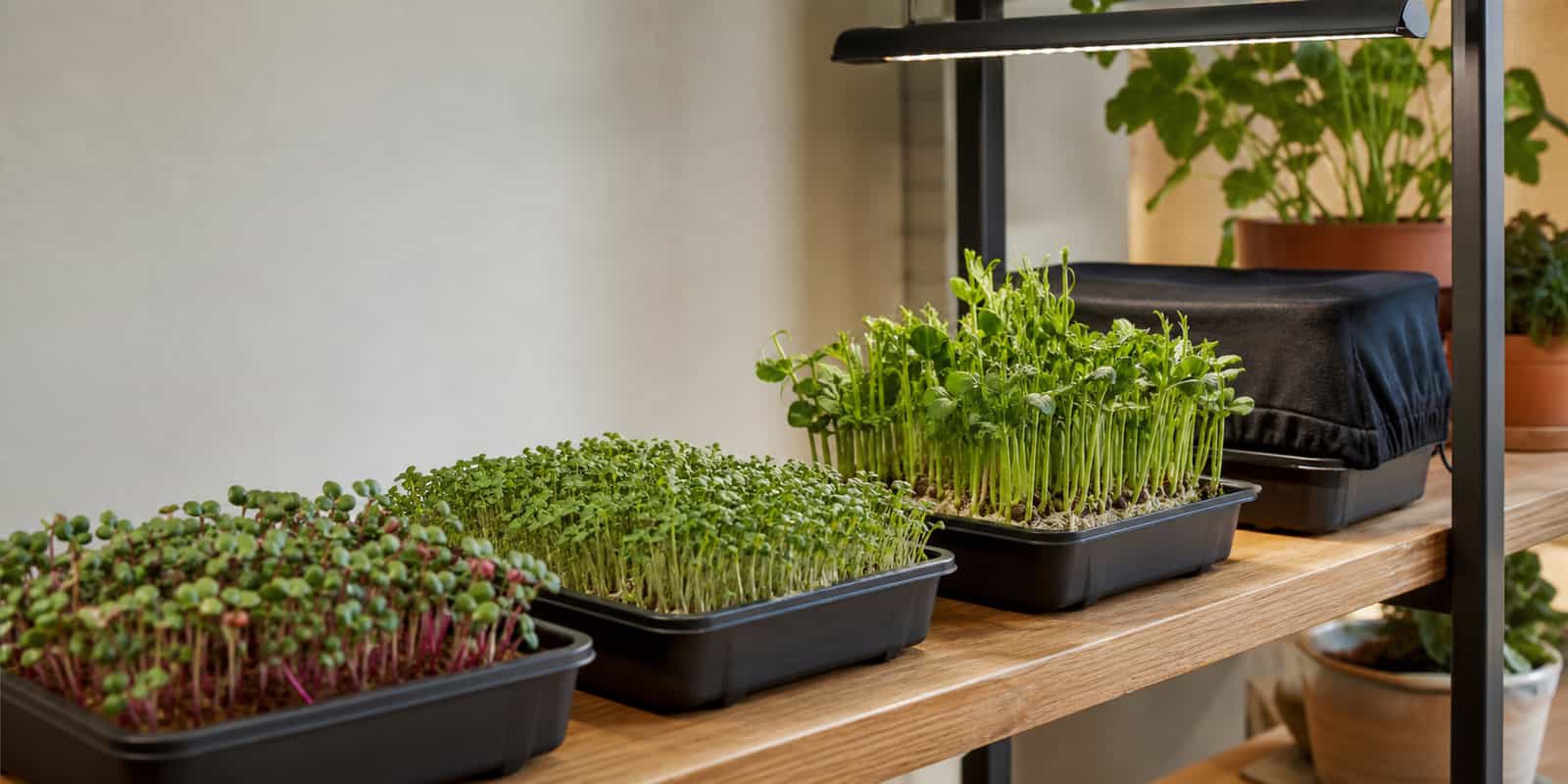
Wheat, Millet, and Quinoa Microgreens: What to Check Before Testing New Crops
Interest is growing in using millet, quinoa, and other underused cereals as microgreens. They may offer new flavors and different nutrient profiles, but a seed being edible as a plant does not guarantee that every growing condition is safe.
Start with a small batch
Confirm that the seed is sourced for food use from a reliable supplier. Record germination, aroma, color, texture, harvest time, and yield. Change one variable at a time and compare the new crop with a familiar variety.
Verify before selling
Before offering a new crop to customers, review local rules, allergen information, labeling, and appropriate use. Do not generalize a nutrient value from one laboratory study to every production system; species, cultivar, light, medium, and harvest stage can change the result.
FAQ: Can a new cereal microgreen be sold immediately? Answer: Source, safety, legal requirements, and customer acceptance should be tested in a small pilot first.