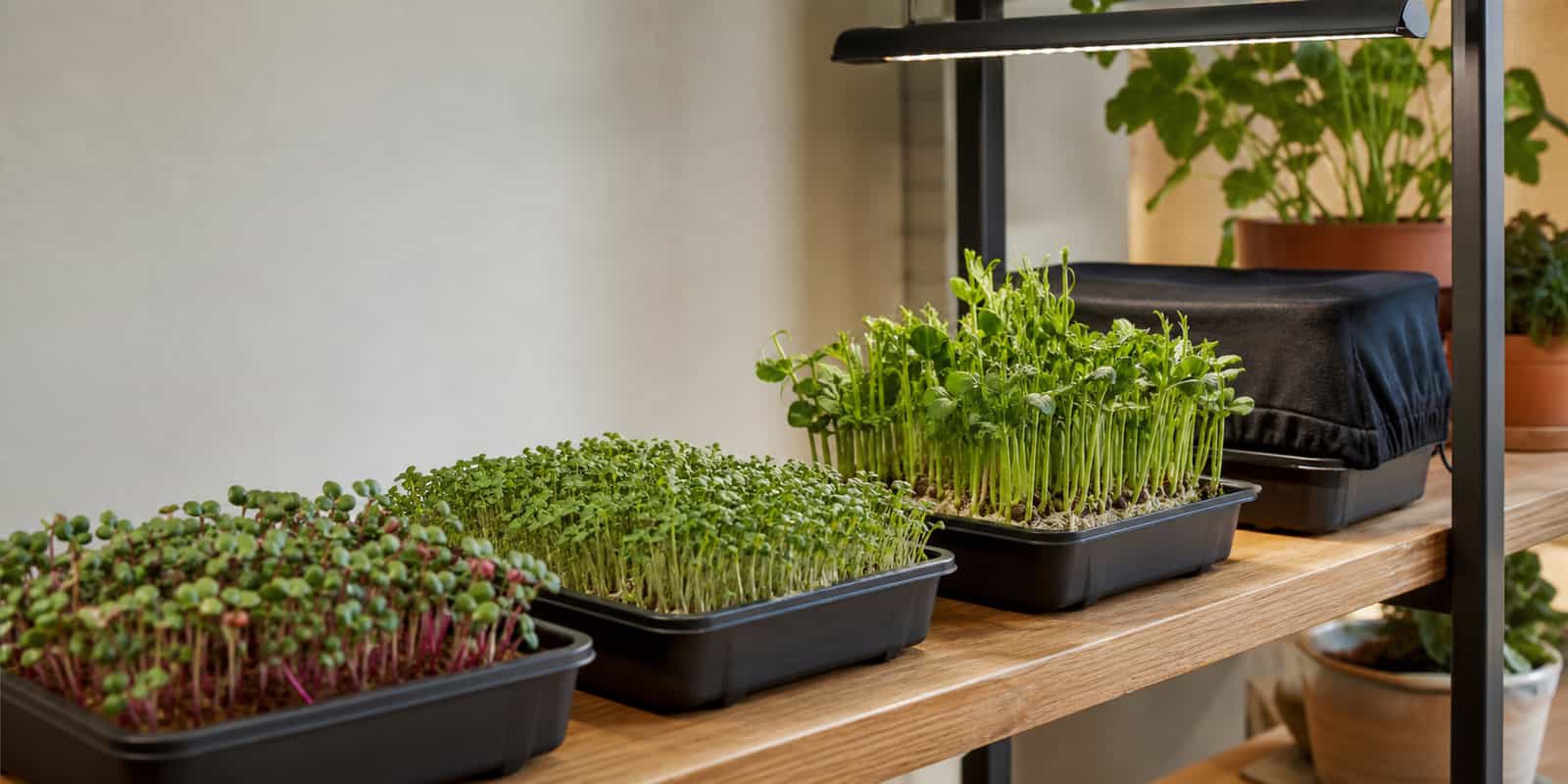
Do Microgreens Save Water? The Reality of Controlled Growing
Controlled growing can deliver water directly to a tray and reduce some losses caused by wind or surface runoff. However, a microgreens system is not automatically water-efficient. Overflow, leaks, unnecessary watering, and dirty reservoirs can increase consumption.
How to measure water use
Record the water supplied to each batch, returned water, evaporation, and crop loss separately. Compare the same variety in the same tray size with different irrigation intervals. Collect data across several cycles instead of generalizing from one tray.
Bottom watering and hygiene
Bottom watering may reduce constantly wet foliage. Shared reservoirs, however, require careful attention to sanitation, water quality, and reuse rules. Requirements vary by production model and local regulation.
When communicating sustainability, explain the system, measurement period, and comparison conditions instead of making an unsupported claim that the crop uses “very little water.”
FAQ: Do microgreens always save water? Answer: They may offer efficiency potential, but the outcome depends on the system, climate, irrigation method, and measurement boundary.