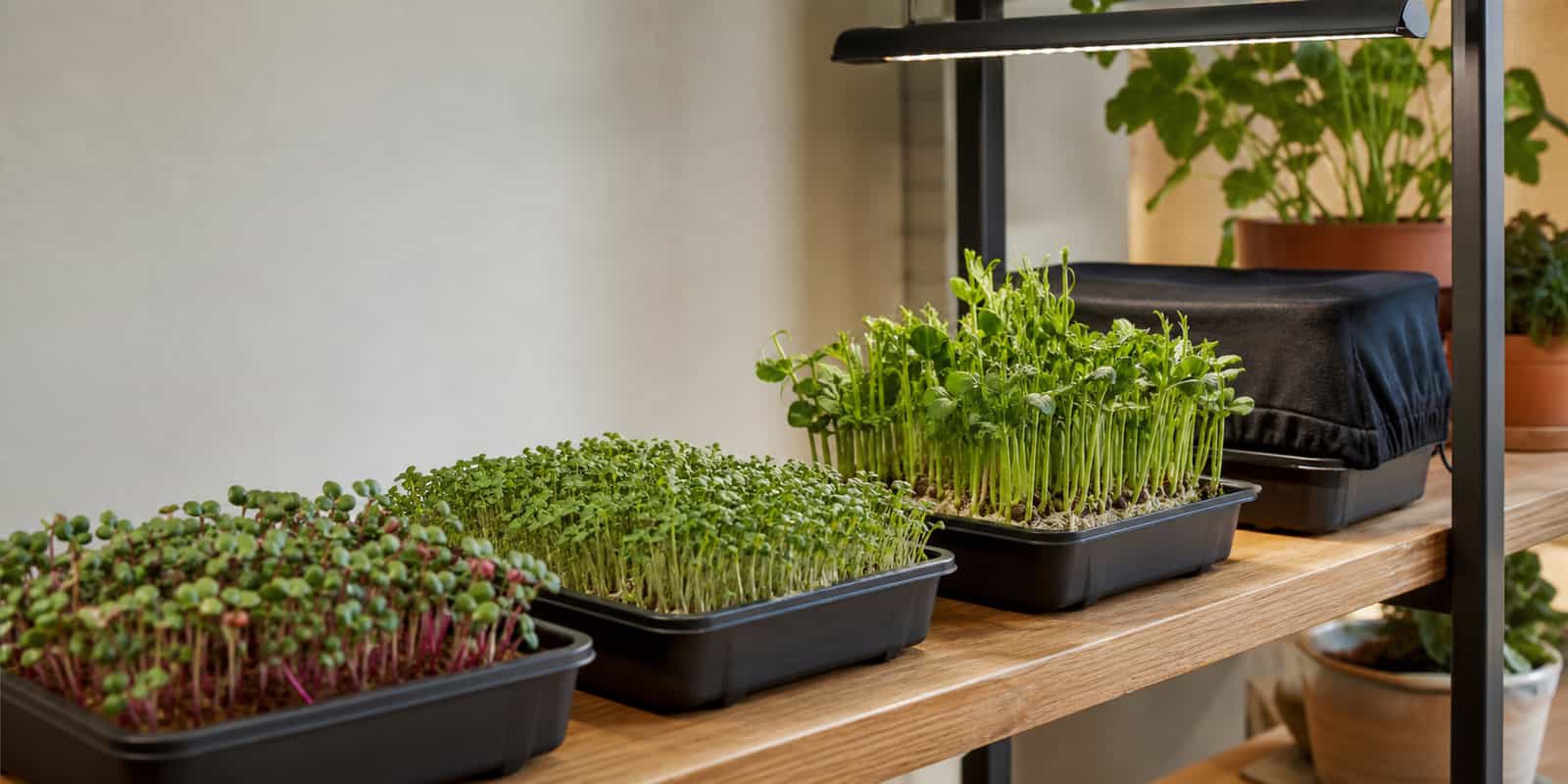
How to Choose LED Grow Lights for Microgreens
Choosing an LED for microgreens based only on wattage can be misleading. Evaluate how evenly the fixture lights the tray, how much heat it produces, its timer controls, and its electricity use.
Read plant signals
Leggy seedlings may be associated with low light, dense sowing, or poor airflow. Pale leaves, scorched edges, or excessive drying suggest that light intensity, temperature, and irrigation should be reviewed together.
Run a controlled test
Grow the same variety at two different distances or durations. Record sowing density, light distance, daily runtime, temperature, and harvest day. Changing one variable at a time makes the results easier to interpret.
Include energy in the decision
Efficient LEDs can reduce operating costs, but cooling, equipment lifespan, and the local power mix also affect the sustainability picture. Define whether your goal is home use or commercial consistency before buying equipment.
FAQ: Which LED color is best? Answer: Consider the plant response, fixture coverage, heat, and energy balance rather than choosing a color in isolation.