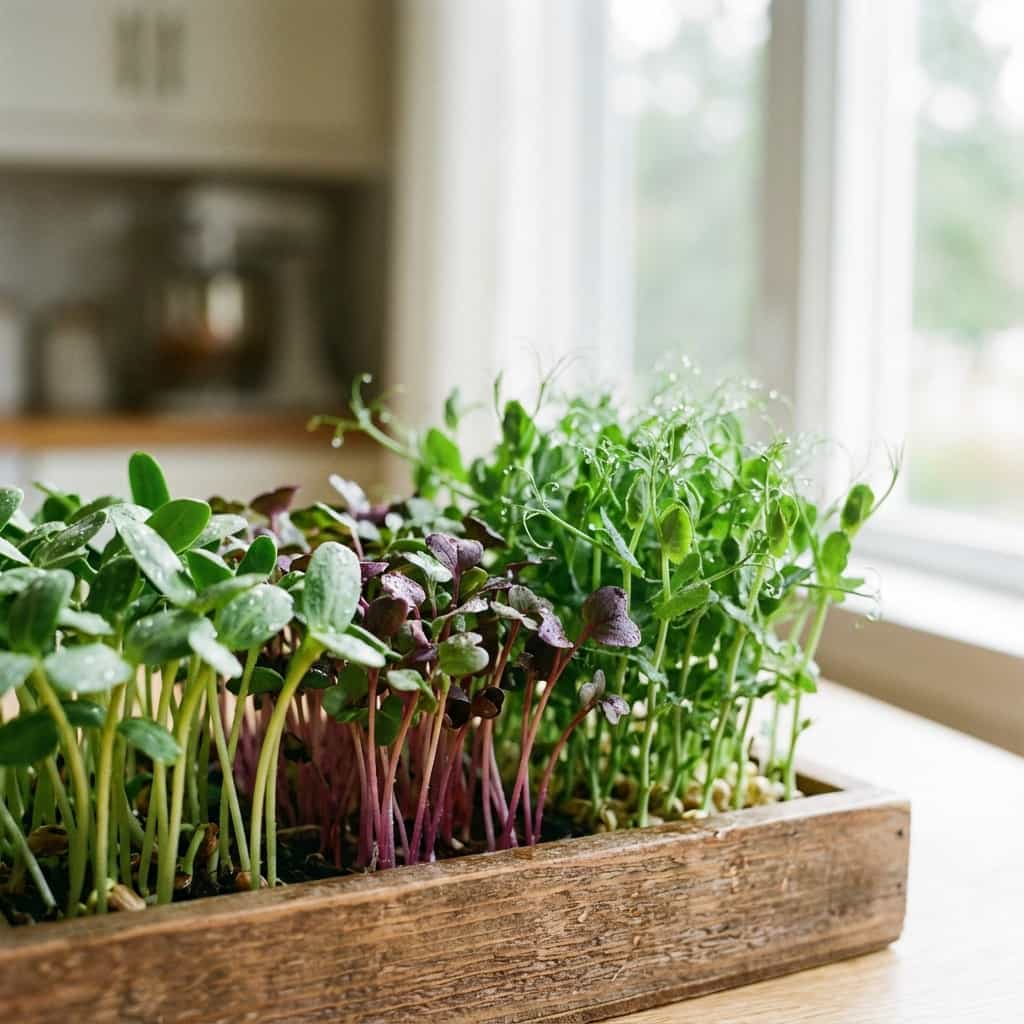
Why Microgreens?
Microgreens are young edible seedlings commonly harvested within a few weeks of germination. Research has found that selected vitamins and carotenoids can be more concentrated than in mature counterparts, but the result varies by crop, compound, and growing conditions.
Growing microgreens at home is one of the most accessible forms of gardening. You don't need a backyard, a green thumb, or expensive equipment. A sunny windowsill, some seeds, and a shallow tray are all it takes.
What You'll Find Here
This knowledge base is your go-to resource for everything microgreens:
- Growing Guides — Step-by-step instructions for each variety, from seed to harvest
- Care Tips — Watering schedules, lighting recommendations, and temperature management
- Troubleshooting — Solutions for common problems like mold, poor germination, and yellowing
- Nutrition Science — Research-backed data on vitamins, minerals, and bioactive compounds
- Recipes & Ideas — Creative ways to use your harvest in everyday meals
Getting Started
If you're new to microgreens, here's the simplest path to your first harvest:
- Choose an easy variety — Radish and pea shoots are the most forgiving for beginners
- Gather basic supplies — A shallow tray, growing medium (coconut coir works well), and quality seeds
- Soak your seeds — Most varieties benefit from 4–12 hours of soaking
- Plant and cover — Spread seeds evenly, mist, and keep in darkness for 2–4 days
- Introduce light — Once sprouts appear, give them 12–16 hours of light daily
- Harvest — When the first true leaves appear (typically 7–14 days), cut just above the soil
The entire process fits on a kitchen counter. There's something deeply satisfying about cutting greens you grew yourself and adding them to your morning meal.
A Note on Quality
Everything in this knowledge base is grounded in research — from USDA nutritional data to peer-reviewed studies on phytochemical bioavailability. When we cite a number, there's a study behind it. When we recommend a technique, it's been tested by growers.
Welcome to the garden. Let's grow something.