Easy Growing
Step-by-step guides for growing 20+ varieties of microgreens with minimal space and equipment
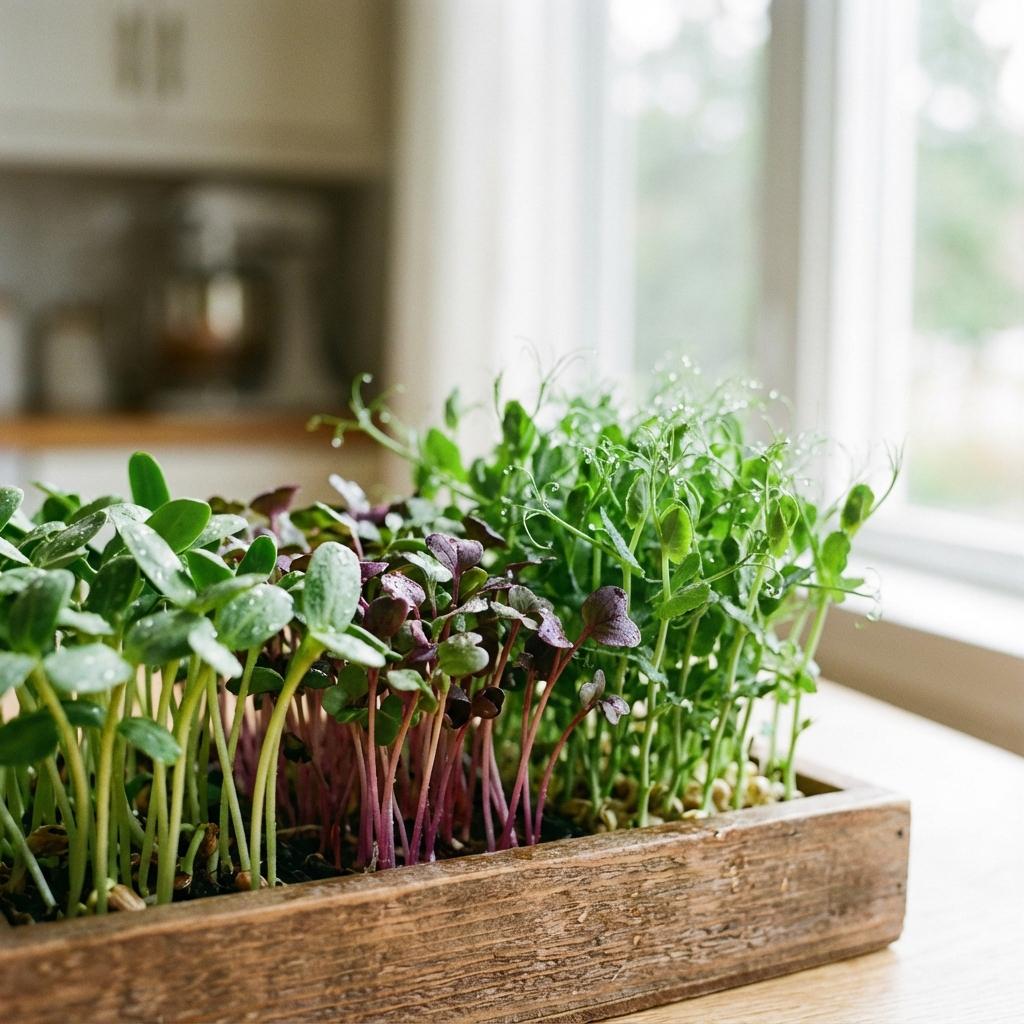
Everything you need to know about growing, caring for, and harvesting nutrient-packed microgreens at home
Grow Flow
Live GuideStep-by-step guides for growing 20+ varieties of microgreens with minimal space and equipment
Learn optimal watering, lighting, and environmental conditions for healthy microgreens
Know exactly when to harvest each variety for maximum flavor and nutritional value
Expected harvest
7-14 days
0x
Than mature vegetables on average
0+
Curated beginner-friendly options
0
From seed to fresh harvest
0%
Compared to store-bought greens
Follow these proven steps to grow healthy, vibrant microgreens every time
Use shallow trays with drainage holes. Clean thoroughly and ensure proper ventilation.
10x20 inch trays work best for most varieties
Soak seeds in cool water for 8-12 hours. Some varieties like peas may need 24 hours.
Use a fine mesh strainer for easy handling
Spread soaked seeds evenly on growing medium. Density varies by variety.
Press seeds gently but don't bury them
Cover trays and keep in darkness for 2-4 days to encourage germination.
Maintain 65-75°F temperature for best results
Once seeds germinate, gradually introduce indirect light, then full grow lights.
12-16 hours of light daily for most varieties
Mist 2-3 times daily, ensure good airflow, and monitor for any issues.
Water from bottom when possible to prevent mold
Your microgreens are now ready to enjoy fresh from your kitchen garden.
Master these four key elements for consistently successful microgreens harvests
Maintain consistent temperature for optimal growth
Keep soil moist but never waterlogged
Provide adequate light after germination
Good ventilation prevents mold and disease
Pro Tip: Consistency is key - check your microgreens at the same time each day.
Learn when and how to harvest for peak flavor and nutrition
Harvest when first true leaves appear, usually 7-14 days after planting
Use clean, sharp scissors to cut just above the growing medium
Rinse gently, dry thoroughly, and store properly for maximum freshness
Radish
2.5-5 cm · Green with red stems
Arugula
2.5-5 cm · Bright green
Broccoli
2.5-5 cm · Dark green
Pea Shoots
5-7.5 cm · Bright green
Sunflower
2.5-5 cm · Green with black shell
Kale
2.5-5 cm · Deep green
| Variety | Days to Harvest | Ideal Height | Color Indicators |
|---|---|---|---|
Radish | 6-8 days | 2.5-5 cm | Green with red stems |
Arugula | 7-10 days | 2.5-5 cm | Bright green |
Broccoli | 8-12 days | 2.5-5 cm | Dark green |
Pea Shoots | 10-14 days | 5-7.5 cm | Bright green |
Sunflower | 7-10 days | 2.5-5 cm | Green with black shell |
Kale | 8-12 days | 2.5-5 cm | Deep green |
Discover the best microgreens for beginners and experienced growers
Spicy, peppery
Vitamin C, Folate
Nutty, slightly bitter
Vitamin K, Calcium
Mild broccoli flavor
Vitamin C, Sulforaphane
Sweet pea flavor
Protein, Vitamin A
Nutty, crunchy
Protein, Vitamin E
Mild kale taste
Iron, Vitamin K
More varieties coming soon...
From nutrition science to planning tools — explore guides, recipes, and resources designed to help you grow better microgreens
Health benefits, recipes & taste profiles
Build better meal and crop decisions with nutrition science, flavor data, and practical kitchen use cases.
What you'll find
Nutrition data and health value
Everyday recipe ideas
Taste chemistry and pairings
Calculators, calendars & variety guides
Plan your production pipeline end-to-end with variety selection, tray calculations, seasonal timing, and batch-level tracking.
What you'll find
Full variety catalog
Calculators and planners
Seasonal grow calendar
Track your growing journey
High-impact answers before your first microgreens tray
Most microgreens are harvest-ready in 7-14 days. Fast crops like radish finish sooner, while pea shoots and cilantro usually need more time.
Radish, broccoli, sunflower, and pea shoots are reliable starter crops. They germinate strongly and handle minor mistakes better than delicate varieties.
Window light can work, but consistency is harder. For stable year-round production, 12-16 hours of LED grow light per day is the safer setup.
Check moisture once or twice daily. Keep the medium evenly moist, avoid pooling water, and prefer bottom watering to lower mold risk.
Yes. With stable temperature, airflow, and lighting, you can run continuous indoor microgreens production in every season.